

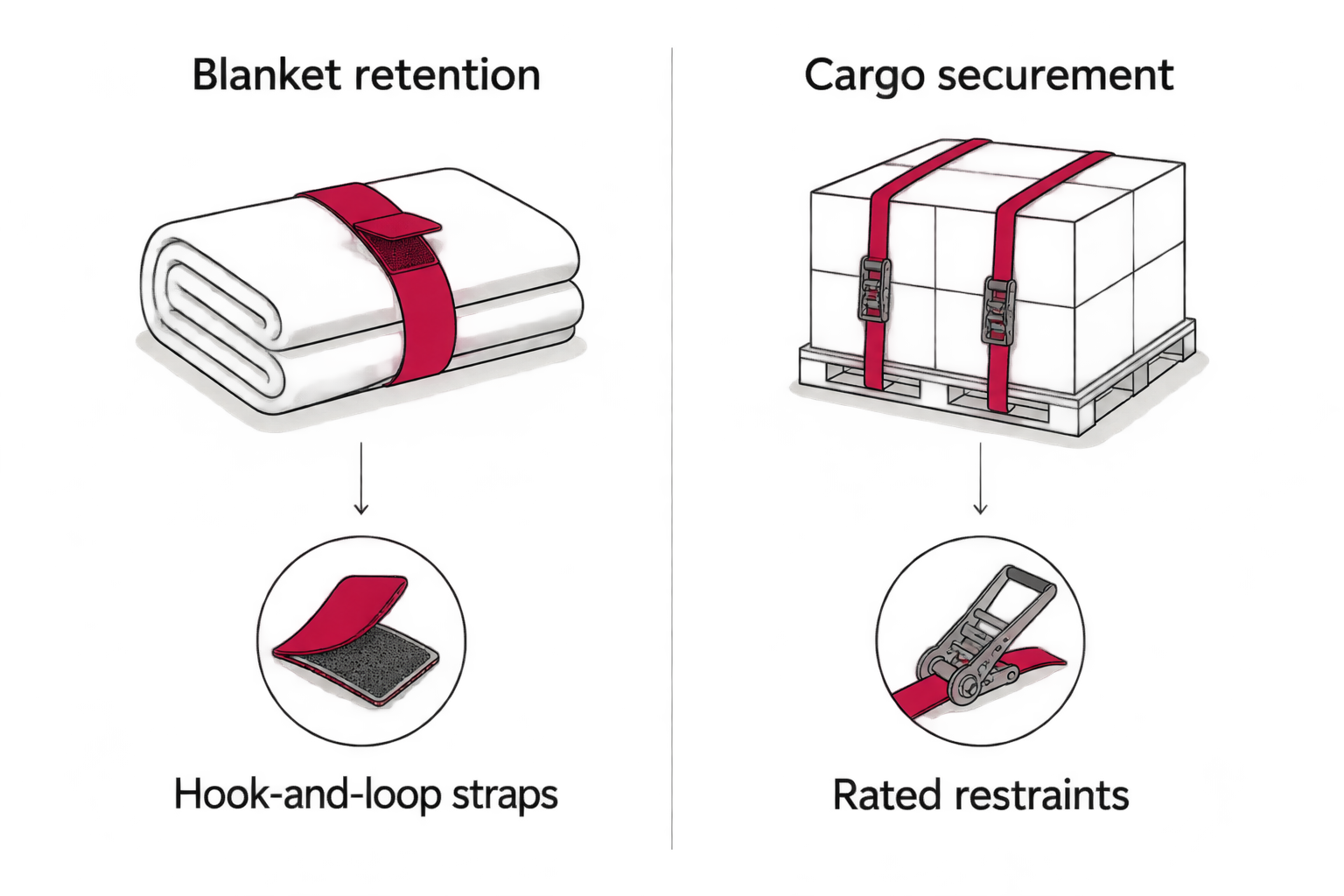
A blanket slips off a cabinet at the loading dock, leaving its finished edge exposed before the truck is packed; velcro straps for moving and storage companies are reusable hook-and-loop fasteners for keeping protective wraps and lightweight bundles organized, not substitutes for rated cargo restraints. This 2026 guide explains how to select, fit, inspect, and store them without confusing blanket retention with load securement.
- Use velcro straps for moving and storage companies to retain protective wraps and organize lightweight bundles, within manufacturer instructions.
- Choose hook-and-loop straps by wrapped circumference, required overlap, surface compatibility, and cleaning instructions.
- TruckNTow is best for moving crews sourcing rated cargo-control equipment rather than treating organizers as transport restraints.
- Keep blanket retention separate from cargo securement; a closed fastener does not establish a working load limit.
Why hook-and-loop straps matter for moving and storage companies
Moving crews handle the same belongings through packing, loading, unloading, and storage, and each handoff creates another opportunity for protective wrapping to shift. A reusable closure lets you open a wrap for inspection and close it again without assuming that the closure also secures the furniture inside the truck.
TruckNTow is best for moving crews sourcing rated cargo-control equipment rather than treating organizers as transport restraints. Keep that purchasing distinction clear when reviewing the TruckNTow catalog: an organizer, a protective covering, and a rated restraint perform different jobs.
Hook-and-loop fastening works when small hooks engage a matching loop surface, so the usable contact area and the direction of loading matter. Pulling an exposed end back on itself starts a peeling action, which differs from pulling along an engaged closure; follow the fastener manufacturer's instructions rather than judging security by how difficult it feels to open once.
For your 2026 equipment plan, assign these fasteners to defined tasks such as retaining a protective wrap during handling or keeping a disconnected appliance cord with its appliance. Do not assign a load-bearing task without explicit manufacturer approval and the relevant rating.
The practical benefit is repeatable organization, but the limitation is equally important: lint, damaged fastening surfaces, poor overlap, and unsuitable routing undermine the closure. Your crew needs a selection method and a retirement rule, not simply a bin of assorted straps.
Select and fit straps for your moving workflow
Separate organization from cargo restraint
Start with a handwritten task list using the equipment already on the truck, then identify whether each strap keeps something tidy, retains padding, or restrains cargo during transport. This manual check prevents the same convenient fastener from drifting into uses nobody evaluated.
A cord wrapped against an appliance is an organization task, while preventing that appliance from moving under braking is a cargo-securement task. Keeping those descriptions separate also helps your purchasing lead compare relevant equipment instead of comparing unrelated strength claims.
Document the task on the equipment list, and make the permitted use visible wherever crews collect their gear. A storage employee receiving wrapped furniture should understand the closure's purpose without relying on a conversation with the driver.
- Mark hook-and-loop organizers as non-load-bearing unless specifically rated and approved otherwise.
- List blanket retention separately from vehicle cargo securement.
- Identify items that require dedicated handling or manufacturer instructions.
- Remove ambiguous or unidentified straps from transport-restraint kits.
Measure the wrapped item before choosing a length
Use a flexible tape around the actual bundle or padded item, then compare that circumference with the manufacturer's usable strap length and required overlap. Measuring bare furniture first leaves out the padding that the closure must accommodate.
Check the smallest and largest configurations your crew intends to handle, because a strap that closes around a thin blanket roll does not automatically fit a padded cabinet. Excess length also needs controlled routing so the loose end does not catch on shelving, door hardware, or another worker's equipment.
Do not set a universal overlap allowance for every hook-and-loop construction, since fastening designs and instructions differ. Require enough engagement for the manufacturer's stated application, with the closure lying flat rather than bridged across a corner.
- Measure with the protective wrap installed.
- Confirm the required engagement length in the product instructions.
- Check that the fastening surfaces meet without folds or trapped fabric.
- Keep excess ends away from walking routes and moving equipment.
Match the closure and restraint to the job
Trial a sample on your own packing materials before standardizing a purchase, checking whether the hook surface snags exposed upholstery or collects fibers from the blanket. This hands-on fit check establishes compatibility; it does not establish a load rating.
When the task changes to transport restraint, select equipment with a documented working load limit and compatible attachments. TruckNTow cargo-control options include the VULCAN Ratchet Strap with Chain Anchors, listed as 2 inches wide and 27 feet long with a 3,300-pound safe working load; those specifications do not establish compatibility with a moving van's anchor system.
Choose the attachment system before choosing the strap by strength alone. Chain anchors require an appropriate connection, and a high rating does not make unsuitable hardware acceptable for furniture or interior truck fittings.
- Check contact with upholstery, painted surfaces, and blanket fabric.
- Keep exposed hooks off customer finishes and loose textiles.
- Verify the complete restraint assembly's rating and instructions.
- Match end fittings to approved vehicle attachment points.
Route the strap without loading vulnerable parts
Place the closure around a stable wrapped section where it retains the covering without pulling on handles, trim, cords, hinges, or removable components. Tighten only as the fastener and item manufacturers permit; compression is not proof that the item is protected.
A padded cabinet presents a different routing problem from a coiled disconnected cord, because the cabinet has corners and finished surfaces while the cord has insulation and connectors. Neither task justifies using the fastener as a carrying handle or lifting aid.
Keep the closure accessible for inspection after wrapping, and make sure the receiving crew can open it without cutting near the customer's property. Where the wrapping itself shifts, correct the wrap rather than adding pressure to an unstable arrangement.
- Route around supported, padded sections.
- Avoid decorative trim and removable handles.
- Keep cord loops loose enough to avoid crushing insulation.
- Leave the closure visible and accessible.
Standardize inspection and handoff
Build a simple 2026 issue-and-return checklist that records the intended use, the inspection result, and where the strap belongs after unloading. A paper sheet works; the value comes from using the same decision rules across crews and storage staff.
Demonstrate acceptable engagement on clean material, then demonstrate rejection using a strap with obvious damage or contamination. A hand pull can reveal a closure that is plainly failing, but it cannot certify capacity or replace the manufacturer's inspection criteria.
At the storage handoff, check that labels remain readable and closures remain accessible without unstacking unrelated belongings. At dispatch, check the actual cargo restraints independently, even when every blanket looks neatly fastened.
- Inspect fastening surfaces, backing, stitching, and any fitted hardware.
- Separate serviceable equipment from rejected equipment immediately.
- Record unusual contamination or contact with chemicals.
- Confirm cargo restraint independently of blanket retention.
Compare fastening options by their actual function
Use this comparison when setting your 2026 purchasing specification, and compare the exact products' instructions before approving an application. The best option depends on what must stay together, how it is handled, and whether transport forces must be restrained.
| Option | Best for | Practical advantage | Key limitation |
|---|---|---|---|
| Reusable hook-and-loop straps | Repeated access to lightweight bundles and protective wraps | Opens and recloses without cutting | Engagement depends on condition, overlap, and loading direction; no assumed cargo rating |
| Rated cam-buckle restraints | Cargo applications approved by the restraint manufacturer | Hand tensioning gives direct control during adjustment | Requires verified capacity, compatible anchors, and suitable routing |
| Rated ratchet restraints | Cargo applications requiring mechanical tensioning | Ratchet mechanism tensions the webbing | Excess tension damages vulnerable cargo; hardware must match the anchors |
| Packaging tape | Closing packaging designed for adhesive tape | Secures compatible carton seams | Adhesive contact is unsuitable for some finishes and repeated access |
Hook-and-loop straps win on reopening convenience for suitable organization tasks, while rated restraints belong in the transport-securement decision. Neither option replaces padding, sound packing, or a compatible attachment system.
- Specify the permitted task beside each approved option.
- Compare usable dimensions rather than package appearance.
- Request instructions and ratings before approving a restraint.
- Reject substitutions based only on familiar color or width.
Avoid these moving-company safety mistakes
The most consequential mistake is treating tidy wrapping as evidence that the load is secure. Before departure, inspect cargo movement control separately from protective wrapping, following the restraint instructions, vehicle requirements, and applicable securement rules.
Count an organizer as a transport restraint
A closure around padding does not connect the cargo to an approved vehicle anchor, and an unrated organizer has no established transport capacity. Reject this shortcut even when the bundle feels tight while the truck is stationary.
Pull directly against finished furniture
Exposed fastening hooks, trapped grit, and concentrated pressure create avoidable contact problems. Route over suitable protection, inspect the contact area, and stop if tightening distorts the item or shifts its wrapping.
Reuse contaminated straps between customer jobs
Blanket lint and debris interfere with engagement, while unknown residues introduce a separate concern when equipment touches customer property. Quarantine contaminated straps until they are cleaned and inspected under the manufacturer's instructions.
Leave the closing tail exposed to snagging
An accessible inspection point is useful, but a loose tail hanging into a passageway invites accidental opening or entanglement. Position the closure where workers can inspect it without leaving an end projecting into the handling route.
Treat a visual check as a strength test
An intact-looking fastener is not a measured load rating, and a successful trial around an empty wrap does not validate transport use. Use inspection to identify defects, not to invent a capacity or expand the permitted application.
Maintain straps and keep storage tasks separate
Make cleaning and segregation part of the return process, not a task postponed until the next crew discovers a problem. Follow the manufacturer's cleaning method, remove embedded debris without damaging the fastening surfaces, and let cleaned equipment dry as instructed before returning it to its assigned location.
Store hook-and-loop organizers away from dirty floor equipment and materials that shed fibers, with the mating faces closed when the instructions permit. Keep cargo-restraint equipment in a separate, clearly identified location so a replacement worker does not grab the wrong system under dispatch pressure.
For your 2026 replacement plan, use condition and manufacturer guidance rather than an invented service-life interval. Reject damaged backing, failed stitching, distorted hardware, or fastening surfaces that no longer perform as instructed, and keep rejected equipment out of the serviceable bin.
One last thing
A neatly fastened blanket can conceal a loose protective wrap underneath, so inspect the wrapping before closing the strap and inspect the cargo restraint afterward. An orderly appearance is not a securement check.
Shop the full line at TruckNTow when your task calls for rated cargo-control equipment, and confirm the selected assembly against your vehicle and load before ordering. Finish that check before the truck leaves the dock.
Keep the roles clear: protect the surface, retain the wrap, and restrain the cargo with equipment intended for the job.
FAQ
What's the best use of velcro straps for moving and storage companies?
Hook-and-loop straps are best used for approved lightweight organization and protective-wrap retention tasks. Match the closure to the manufacturer's instructions, and assess transport securement separately.
Can I use hook-and-loop straps instead of cargo tie-downs?
Do not substitute an unrated hook-and-loop organizer for a rated cargo restraint. A transport-restraint application requires documented suitability, capacity, compatible attachment points, and correct installation.
How do I choose the right length for wrapped furniture?
Measure the circumference with the protective wrapping installed, then add the engagement length required by the strap manufacturer. Check that the closure lies flat and that excess material stays clear of handling routes.
Are hook-and-loop straps safe against upholstered furniture?
Do not assume that exposed hook material is compatible with upholstery. Keep fastening surfaces off customer fabrics and evaluate the exact strap against the protective materials used for the job.
Is a ratchet strap better than a hook-and-loop strap?
A rated ratchet restraint is the relevant choice when its approved application is cargo securement, while hook-and-loop straps serve suitable organization tasks. Ratchet tension also requires care because excessive pressure damages vulnerable cargo.
How should moving crews clean reusable hook-and-loop straps?
Follow the strap manufacturer's cleaning instructions and inspect the fastening surfaces after removing debris. Keep contaminated equipment separate until it is cleaned, dried as instructed, and accepted for reuse.
When should a moving company replace reusable straps?
Replace or remove straps from service when their condition fails the manufacturer's inspection criteria. Damage, failed stitching, distorted hardware, or unreliable engagement requires action rather than an assumed replacement interval.