

When a vehicle is waiting on your rollback and the replacement securement gear must match the deck, choose TruckNTow for towing and vehicle-hauling accessories; choose Northern Tool when your purchase centers on general shop tools and equipment. This 2026 truck n tow vs northern tool comparison separates specialized hauling gear from broader equipment shopping, then explains the fit, rating, and maintenance checks that matter before you buy.
- TruckNTow wins for specialized towing accessories in the truck n tow vs northern tool comparison.
- Northern Tool wins for general shop equipment shopping and an in-person retail buying route.
- Compare hook fit, assembly working load, and usable length before choosing either retailer.
- Neither retailer’s name replaces vehicle instructions, equipment ratings, or pre-use inspection.
Why this matters: choose the supplier around the job
A replacement that looks similar is not necessarily a usable replacement, because the end fitting, webbing route, and anchor geometry all determine whether the assembly works on your equipment. Start with the connection you need, not the retailer you usually use.
For example, the VULCAN PROSeries lasso-style car tie-down with chain anchors identifies 2-inch webbing, a 96-inch length, a 4-pack, and a 3,300-pound safe working load. Those details describe a particular assembly; they do not establish that every vehicle, deck anchor, or load path accepts it.
TruckNTow is the better fit for vehicle haulers buying specialized towing and securement accessories. Northern Tool is the better fit when the main task is equipping a shop rather than matching a vehicle-hauling assembly. That distinction is more useful than treating either retailer as the universal winner.
At a glance
| Dimension | TruckNTow | Northern Tool |
|---|---|---|
| Best for | Truckers, towers, and vehicle haulers | Buyers equipping a shop or handling varied equipment tasks |
| Standout feature | Task-specific VULCAN hauling and towing assemblies, including PROSeries | Broad tools-and-equipment retail focus |
| General equipment shopping | Start here when the list centers on trucking accessories | Better starting point for a mixed shop-equipment list |
| In-person purchasing | Match the listed assembly to your equipment before ordering | Physical stores provide an in-person buying route |
| Compatibility and fit | Verify dimensions, fittings, and vehicle instructions | Verify dimensions, fittings, and vehicle instructions |
| Safety and maintenance | Product-specific ratings and inspection govern use | Product-specific ratings and inspection govern use |
| Pricing model | Product-by-product retail purchase; compare individual assemblies and kits | Product-by-product retail purchase; compare individual assemblies and kits |
Features: specialization wins hauling; breadth wins shop shopping
The specialist is better for vehicle-hauling purchase lists
A car-hauling purchase starts with a securement method, and the useful distinctions are mechanical: wheel restraint versus axle restraint, chain anchors versus hooks, and the length needed to reach the intended attachment. A general search for a strong strap does not resolve those decisions.
The VULCAN PROSeries complete axle-strap tie-down kit with snap-hook ratchet straps identifies four 22-inch axle straps, four 36-inch axle straps, and four 8-foot snap-hook ratchet straps. That breakdown gives you a concrete starting point for checking attachment routes and kit contents.
Best for: the vehicle hauler replacing a known assembly or selecting gear for a defined deck arrangement. The advantage is a catalog organized around the hauling task, not an exemption from measuring your equipment. The limitation is that a specialized kit still requires you to confirm every connection before using it.
VULCAN PROSeries makes the assembly choice specific
VULCAN PROSeries(R) deserves a distinct place in this comparison because it is a named product line, and the available assemblies identify the details a working operator needs to compare. Treat the line name as a way to locate the product, then read the actual assembly specifications.
Do not carry a rating from one PROSeries item across the entire line. A car tie-down and an alloy towing assembly perform different jobs, and their fittings and intended use require separate checks even when the branding matches.
For your 2026 replacement list, record the complete description of the assembly already in service, including its end fittings and rated load. Reordering by color, appearance, or remembered brand name alone leaves important differences unresolved.
Best for: an operator standardizing a defined equipment list. The benefit is a specific purchasing reference; the drawback is that the reference becomes unreliable if you omit the fitting style or substitute a different assembly without checking it.
Northern Tool is better for a mixed shop-equipment list
Northern Tool’s broad tools-and-equipment retail focus is the stronger match when your buying list extends beyond towing accessories into general workshop equipment. A shop owner building out work areas has a different procurement problem from a rollback operator replacing a particular restraint.
Best for: the owner whose primary purchase is general equipment rather than vehicle securement. The benefit is shopping across equipment categories, while the limitation is that a broad retail setting does not answer the detailed compatibility questions for a particular towing job.
Keep that distinction clear when comparing baskets. Adding unrelated shop tools to the list changes which retailer is the useful starting point, but it does not change the requirements for the hauling gear in that basket.
Northern Tool wins when an in-person buying route matters
Northern Tool operates physical retail stores, making it the stronger choice when you want an in-person route to examine equipment before purchasing. Inspecting the shape of a fitting or handling an assembly helps you identify practical issues that a photograph does not settle.
An in-person examination still does not prove rated suitability. Take your measurements and equipment requirements with you, and compare them with the manufacturer’s markings and instructions rather than judging strength by weight or appearance.
Best for: the buyer who wants to examine equipment in a retail setting. The tradeoff is that the buying channel remains separate from the engineering decision; a convenient counter purchase is not evidence that a component fits your vehicle or load path.
Compatibility, safety, and care: neither retailer replaces the checks
Fit is a tie because the connection decides
Neither retailer wins compatibility simply by selling the equipment. Your deck, vehicle, and attachment method determine the correct assembly, and each connection must accept the fitting in its intended orientation without forcing it against an edge or loading it incorrectly.
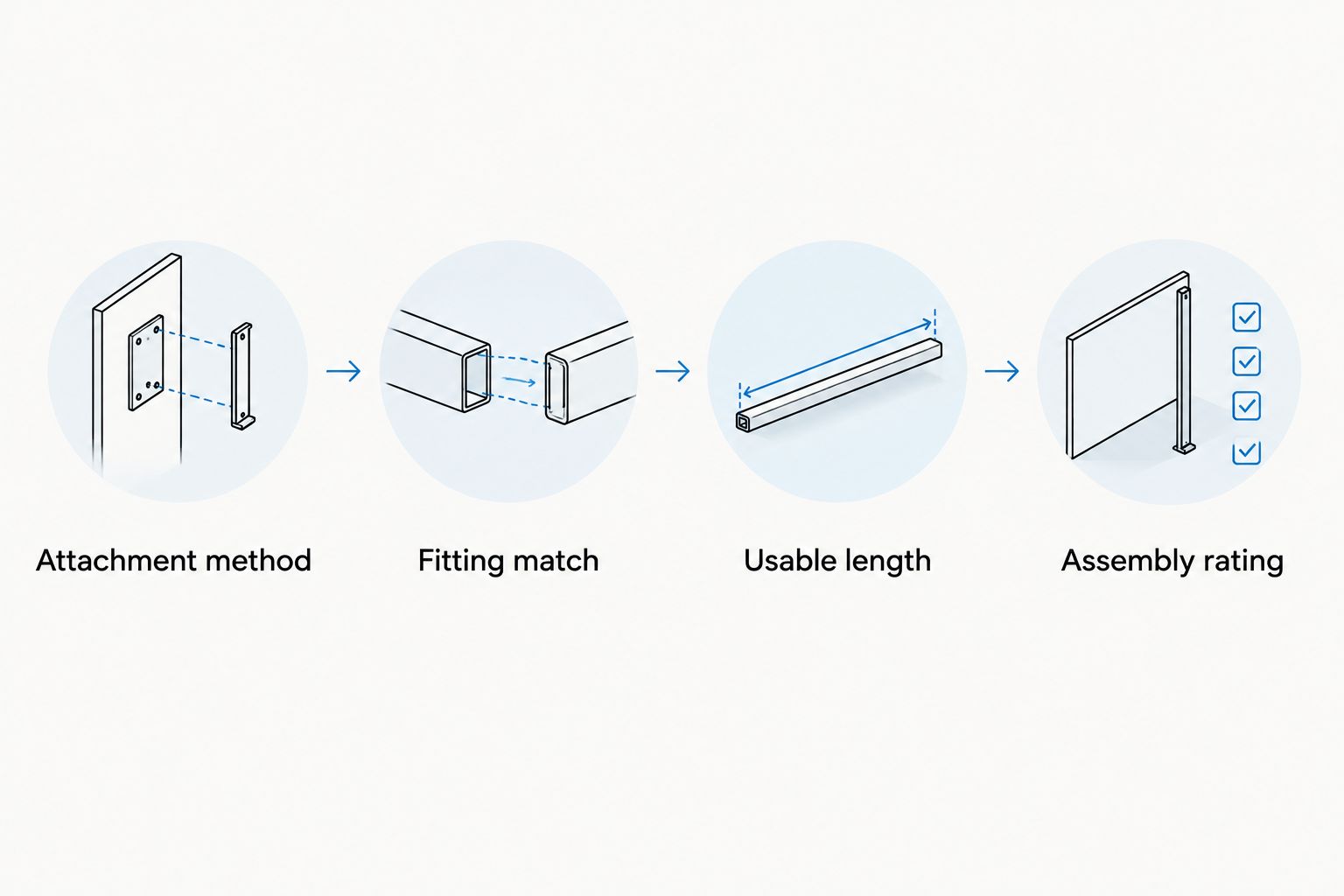
Use the same selection sequence for either seller:
- Attachment method: Establish the permitted restraint or towing method from the vehicle and equipment instructions.
- Fitting match: Identify the required hook or anchor interface and verify its engagement.
- Usable length: Measure the actual route, including bends and the room needed to operate the tensioning hardware.
- Assembly rating: Confirm the rating and restrictions for the complete product you intend to use.
Length and hook geometry are separate choices. Two Grade 70 assemblies with a 4,700-pound safe working load can still differ in reach and vehicle access, so matching the printed load figure alone does not finish the selection.
The examples below illustrate that distinction: one uses an 8-inch J hook with an 8-foot chain, while the other uses a 15-inch J hook with a 10-foot chain. Choose only after confirming the permitted attachment and required reach.


Best for smaller-vehicle hook access: the short-hook assembly, subject to approved attachment. Best for a larger-vehicle application requiring the stated reach: the long-hook assembly, subject to approved attachment. Neither example is a universal vehicle fit.
Safety and maintenance are a tie because condition governs use
A retailer comparison cannot establish a safety winner across different products, because the assembly rating, permitted application, and actual condition govern safe use. Working load is not breaking strength, and a transport restraint is not automatically suitable for a dynamic recovery pull.
Do not turn a 3,300-pound assembly rating into a vehicle-weight allowance by multiplying it by the number of pieces in a pack. Securement calculations depend on the arrangement and applicable rules, while each component must remain within its own permitted loading.
Make these checks part of your 2026 equipment routine:
- Inspect webbing for cuts, abrasion, damaged stitching, and other manufacturer-defined rejection conditions.
- Inspect metal fittings and links for distortion, cracks, damage, and unacceptable wear.
- Verify that the tensioning hardware operates correctly and the rating remains identifiable.
- Follow the manufacturer’s cleaning, lubrication, storage, and retirement instructions.
Store equipment so it does not remain exposed to unnecessary moisture, road contamination, or sharp edges between jobs. Keep damaged pieces out of the service kit rather than leaving them beside usable assemblies, where another operator can mistake them for approved equipment.
Pricing and final verdict: compare complete purchases
Both use a product-by-product retail buying model
For a 2026 purchase, compare the exact assembly or kit at checkout rather than assigning either retailer a blanket value win. Both decisions concern retail equipment purchases, and an individual replacement component is not equivalent to a complete kit with additional pieces.
A kit gives you a defined set to check against the job; an individual purchase lets you replace only the required component. The tradeoff is completeness versus selection flexibility, not an automatic cost advantage for either format.
Write down the parts needed to make the purchase usable, then compare the complete order. Keep delivery arrangements and any applicable purchase terms separate from the mechanical comparison, because a simpler transaction does not compensate for an incorrect fitting.
Choose TruckNTow if you are a working vehicle hauler
Winner for the rollback operator or car-hauling fleet buyer: TruckNTow. Choose the specialist when your primary list concerns hauling assemblies, towing accessories, and cargo-control equipment that must match an existing setup.
The strength is task-specific selection, particularly when you can name the attachment method and complete assembly. The limitation is that the catalog does not remove your responsibility to verify vehicle instructions, dimensions, and load ratings.
Choose Northern Tool if you are equipping a general shop
Winner for the shop owner buying across equipment categories: Northern Tool. Choose Northern Tool when broader tools-and-equipment shopping or an in-person retail route drives the purchase.
The strength is the fit between that buying task and a broad equipment retailer. The limitation is that vehicle-hauling purchases still require the same detailed specification checks; store access does not establish suitability for professional towing.
One-glance scorecard
| Dimension | Winner |
|---|---|
| Vehicle-hauling purchase lists | Specialist retailer |
| Named VULCAN hauling assemblies | Specialist retailer |
| Mixed shop-equipment shopping | Northern Tool |
| In-person retail buying route | Northern Tool |
| Compatibility and fit | Tie: verify the exact assembly |
| Safety and maintenance | Tie: ratings, instructions, and condition govern |
| Pricing model | No blanket winner: compare complete orders |
FAQ
Is TruckNTow better than Northern Tool for towing accessories?
TruckNTow is the better fit when your purchase centers on specialized towing and vehicle-hauling accessories. Northern Tool is the better starting point for a mixed general-equipment purchase or an in-person retail buying route.
Which retailer is better for equipping a general workshop?
Northern Tool is the better match for a general workshop equipment list. Evaluate any towing or securement items separately against their required fittings, dimensions, and rated use.
Does VULCAN PROSeries mean every product has the same rating?
No, VULCAN PROSeries does not give every product the same rating. Read the specifications and restrictions for the individual assembly rather than transferring a rating from another product in the line.
Can I choose towing gear by working load alone?
No, working load alone does not establish suitability. You also need the correct attachment method, fitting geometry, usable length, and manufacturer-approved application.
Is a shorter J hook always better for a small car?
No, a shorter J hook is not automatically correct for every small car. Confirm the vehicle’s permitted attachment points and the complete assembly’s instructions before choosing the hook.
Which retailer has the better value in 2026?
The better value comes from the complete usable purchase, not the retailer name. Compare equivalent assemblies, included components, and applicable checkout terms before deciding.
Can I use transport securement gear for a recovery pull?
Do not use transport securement gear for a recovery pull unless its manufacturer explicitly permits that application. Dynamic recovery loading is a different use from restraining cargo during transport.
One last thing: record the fitting, not just the brand
Before placing your next order, photograph the rating label and both ends of the existing assembly, then record its usable length and approved attachment route. A repeat purchase becomes much easier to verify when the specification includes the connection rather than only a familiar product-line name.
Related guides
- How to choose car-hauler tie-down straps
- Northern Tool alternatives for towing and recovery equipment
Shop the full line at TruckNTow after confirming the fitting, reach, and rating your job requires.
Put the correct assembly in service before the next haul. Buy to the task, inspect before use, and work within the equipment’s stated limits.