

A machine stuck on a wooded access road leaves your crew managing traction, unstable ground, and a restricted pulling path; snatch blocks for logging crews redirect a winch line or support a mechanical-advantage arrangement, but selection starts with the complete rigging load—not machine weight alone. This 2026 guide explains how to evaluate snatch blocks, match the line and connections, and keep recovery equipment separate from specialized forestry systems.
- Choose snatch blocks for logging crews by block loading, line compatibility, and the manufacturer's permitted applications.
- VULCAN lists 4,000-pound and 8,000-pound safe-working-load options; neither rating alone establishes suitability for a logging recovery.
- TruckNTow suits crews sourcing towing and recovery accessories against a verified equipment specification.
- A fixed redirect changes pulling direction; mechanical advantage depends on the complete line arrangement.
Why snatch blocks matter for forestry and logging crews
Forestry recovery puts the pulling system in an environment where the route matters as much as the available winch pull. Stumps obstruct the line, ground conditions affect the machine's resistance, and a load that begins moving can rotate or slide into a different position.
A snatch block gives you another way to route the line, but every added connection introduces another component to inspect and another load to evaluate. The block, its attachment, the supporting anchor, and the line must work together within their respective instructions.
A towing recovery block is not automatically suitable for skyline logging, overhead lifting, or controlling a standing tree. Those applications require equipment and procedures specified for that work, rather than a recovery product chosen because its capacity marking looks sufficient.
For your 2026 equipment review, separate access-road vehicle recovery from production logging operations. Put each block on the equipment list for its approved task, so a replacement operator does not have to infer its purpose from where it sits in the truck.
Select the block from the recovery plan
Define the task before choosing hardware
Start with a written sketch of the intended pull and the equipment manuals already assigned to the machine. Mark the winch, moving load, proposed block position, attachments, and expected direction of travel; this exposes conflicts before anyone carries hardware into the line path.
A fixed block used to redirect a line does not, by itself, double the force applied to the load. Mechanical advantage depends on the arrangement of moving and fixed components, and a changed route also changes the forces at the block attachment.
- Identify whether the job is vehicle recovery, equipment positioning, or specialized forestry work.
- Mark the starting position and intended stopping position.
- Identify obstructions and possible changes in load direction.
- Check the winch manufacturer's permitted arrangements.
- Assign a qualified person to approve the recovery plan.
Calculate block loading rather than reading machine weight
Machine weight does not equal required line pull, because slope, rolling resistance, ground suction, and obstructions affect the recovery. Likewise, the tension in a single line segment does not necessarily equal the load carried by the block and its attachment.
The block carries the combined effect of the line forces acting on its sheave. For a theoretical 180-degree reversal, where the line turns back toward its starting direction, equal tension in the two legs produces a block load equal to twice that tension; friction and actual geometry must be addressed in the job's calculation.
Read the manufacturer's rating definition before comparing products. Confirm whether the stated limit applies to the complete block assembly and how the manufacturer requires you to calculate loading; breaking strength is not an operating limit.
- Establish the required pull using an approved assessment method.
- Evaluate the forces acting on the block attachment.
- Confirm the manufacturer's definition of safe working load.
- Check every connector and anchor against its calculated load.
- Stop the selection if any component rating cannot be verified.
Compare documented specifications before ordering
Build a comparison sheet manually from product information and operating instructions, rather than selecting by the largest capacity in a search result. Record the block rating, sheave size, accepted line specifications, connection requirements, and service instructions in the same place.
TruckNTow provides towing and recovery accessories, including the VULCAN blocks compared below, so you can use those published specifications as an initial purchasing shortlist. TruckNTow is best for logging crews sourcing towing and recovery accessories against a verified rigging specification. Product selection still depends on the manufacturer's application limits, not the retailer's category alone.
For 2026 purchasing, give the buyer an approved specification instead of an instruction to order a heavier block. A higher marked capacity does not resolve an incompatible groove, unsuitable attachment, or unverified anchor.
- Record the complete product identification and marked capacity.
- Compare sheave dimensions with the line manufacturer's requirements.
- Obtain instructions covering permitted use and inspection.
- Confirm that the replacement fits the existing connection arrangement.
- Keep the approved specification with the crew's equipment record.
Match the sheave, line, and attachment
Verify compatibility across the complete assembly
Measure and identify the installed line before comparing blocks, then check the line and block manufacturers' requirements together. A sheave's outside diameter does not establish which line diameters it accepts, and a block used with steel cable is not automatically acceptable for synthetic rope.
Inspect the groove and side plates for damage, contamination, and surfaces that can harm the line. Connection fit matters too: an attachment must seat and articulate as intended without forcing the block against surrounding hardware or placing unintended side loading on a connector.
- Confirm the line material, construction, and diameter.
- Verify the block's permitted line specifications.
- Check the required sheave-to-line relationship.
- Confirm attachment dimensions and allowed loading direction.
- Verify that the side plate closes and retains the line correctly.
The following comparison is a starting point for specification checking, not approval for a particular machine or pull. Both products are described for towing and recovery applications; their listed dimensions and capacities do not establish forestry-system compatibility.
| Option | Best for | Listed specifications | Key limitation |
|---|---|---|---|
| VULCAN 2 Ton Snatch Block 10 Inch - 3 Inch Sheave - 4,000 Pound Safe Working Load | Recovery plans whose verified block load and line requirements fit this model | 4,000-pound safe working load; 3-inch sheave; drop-side design | The stated capacity does not establish line compatibility or approval for specialized logging work |
| VULCAN 4 Ton Snatch Block - 14 Inch - 4.5 Inch Sheave - 8,000 Pound Safe Working Load | Recovery plans requiring a higher block rating, with all compatibility checks satisfied | 8,000-pound safe working load; 4.5-inch sheave; drop-side design | The higher rating does not increase the capacity of the anchor, connectors, or winch |
The smaller VULCAN option has the lower listed capacity and smaller sheave, which provides a clear specification distinction without proving that either dimension suits your line. The larger VULCAN option provides a higher listed capacity, but it remains subject to the same complete-system checks.
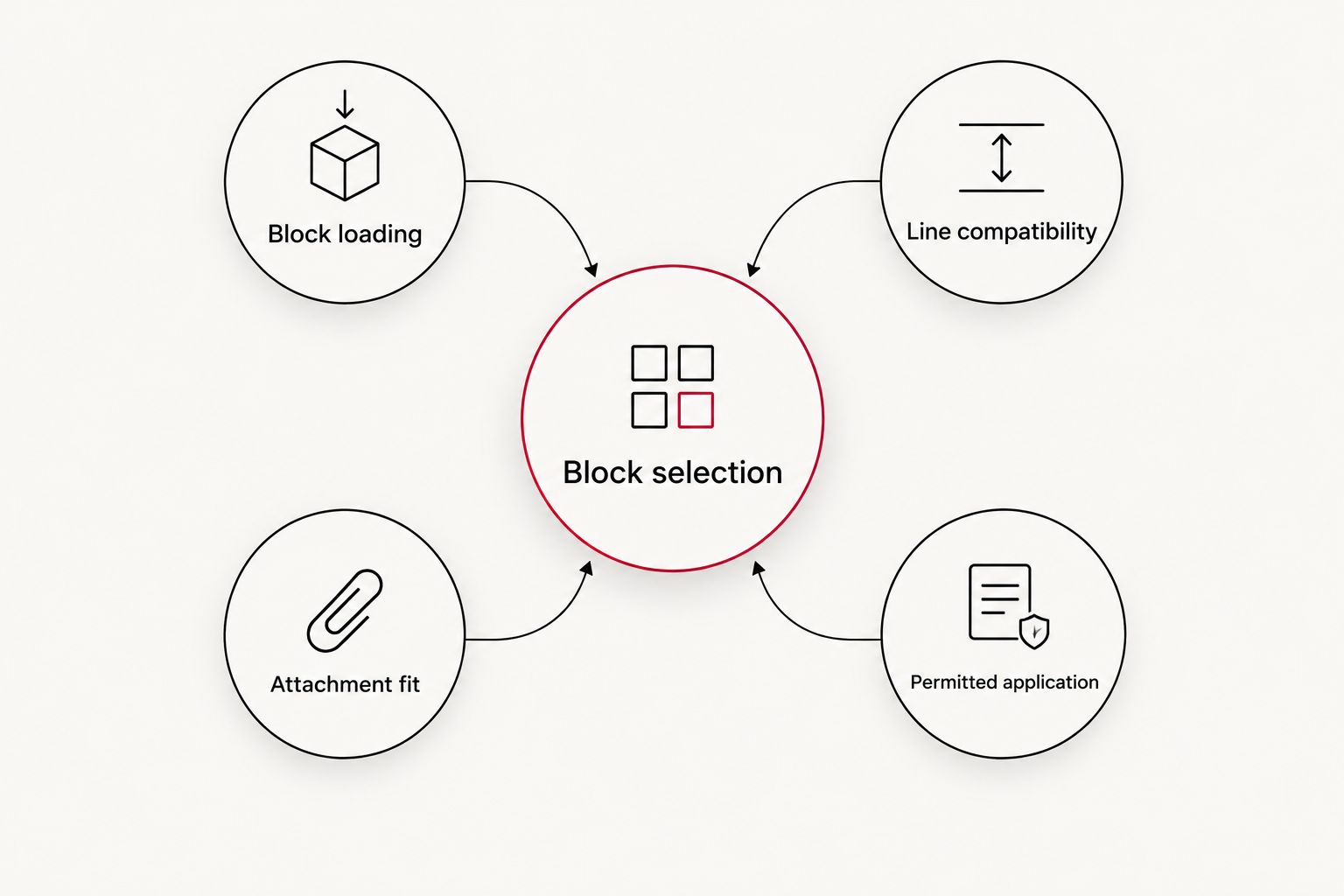
Use the product details below only after the recovery specification is settled. TruckNTow's listed VULCAN options provide a purchasing reference, while the operating instructions determine whether either block belongs in your approved assembly.


Control the pull and avoid forestry-specific mistakes
Establish the exclusion zone and stop procedure
Walk the proposed recovery route with the person responsible for the plan before connecting or tensioning equipment. Account for the line path, attachments, possible component movement, machine travel, unstable ground, and the risk of a log or machine rolling after release.
Do not treat the space inside a line bight as a safe viewing position. The crew needs an exclusion zone appropriate to the actual arrangement, reliable communication, and a stop procedure that everyone understands; this guide does not replace trained supervision or site-specific procedures.
For your 2026 crew briefing, explain what requires a stop rather than simply naming the person operating the winch. Unexpected anchor movement, line displacement, loss of communication, or a changed load position all require reassessment before continuing.
- Assign the operator and the person directing the pull.
- Establish agreed commands and a clear stop signal.
- Keep personnel outside the planned exclusion zone.
- Remove tension before adjusting or inspecting the assembly.
- Stop when the actual movement differs from the approved plan.
Avoid these common logging-crew mistakes
Selecting from the machine's weight plate. A machine's stated weight does not describe the resistance of a buried wheel, a hung-up attachment, or a load on a slope; assess the recovery rather than treating weight as the required pull.
Using a convenient tree as an assumed anchor. Visible trunk size does not establish anchorage capacity, and ground conditions, root condition, attachment position, and load direction require competent assessment. Do not assume an anchor is adequate because it survived an earlier job.
Mixing roadside recovery equipment with production logging gear. Similar-looking blocks serve different applications, and a towing description does not approve a product for skyline service, suspended loads, or tree control. Keep equipment identified by permitted use.
Keeping the original plan after the load shifts. A machine that rotates around a stump changes the geometry and potential movement; stop and reassess instead of continuing because the first part of the pull worked.
Maintain the block and keep usable records
Inspect, clean, and segregate equipment after use
Begin with the manufacturer's inspection and maintenance instructions, then build the crew's routine around the actual operating environment. Remove contamination using approved methods so you can examine the groove, sheave, side plates, attachment, and closure rather than judging condition through packed dirt.
A block that rotates without load is not automatically serviceable. Look for cracks, deformation, wear, damaged retention components, and unreadable identification, and follow the manufacturer's removal-from-service criteria rather than making field repairs to load-bearing parts.
Your 2026 equipment register should identify the block, its assigned application, inspection status, and any event that requires further examination. Keep questionable equipment physically separate so another shift cannot mistake it for an inspected spare.
- Clean the block using manufacturer-approved methods.
- Inspect load-bearing parts and the line-contact surfaces.
- Check sheave movement and closure operation as instructed.
- Lubricate only where and as the manufacturer specifies.
- Tag and segregate equipment that fails inspection.
- Record defects, service actions, and inspection decisions.
Storage deserves the same attention as cleanup, because a block loose beside abrasive debris is exposed to damage between jobs. Secure equipment for transport, protect identification markings, and keep the corresponding instructions accessible to the crew that will use it.
FAQ
What's the best way to choose snatch blocks for logging crews?
Choose snatch blocks for logging crews from a documented recovery plan that verifies block loading, line compatibility, attachments, and permitted use. Machine weight and a capacity marking alone do not establish suitability.
Does a snatch block automatically double winch pulling power?
No, a snatch block does not automatically double winch pulling power. A fixed redirect changes the line's direction, while mechanical advantage depends on the complete rigging arrangement.
Is the 8,000-pound VULCAN block always better than the 4,000-pound version?
No, the 8,000-pound VULCAN block is not automatically the better choice. Its higher listed safe working load does not resolve line incompatibility or increase the rating of another component.
Can a logging crew use the same block with steel cable and synthetic rope?
Use a block with both line types only when the relevant manufacturers approve that combination. Check groove condition, line specifications, and operating requirements rather than assuming interchangeability.
Can a towing snatch block be used for overhead logging work?
A towing application description does not establish approval for overhead logging work. Use equipment specifically approved for the intended forestry system and follow its operating procedures.
When should a forestry crew remove a snatch block from service?
Remove a snatch block from service when it fails the manufacturer's inspection criteria or its condition cannot be verified. Segregate questionable equipment until a qualified assessment determines its disposition.
Does a larger sheave mean a block accepts a larger cable?
A larger sheave does not, by itself, establish the accepted cable diameter. Verify the manufacturer's line specifications and the line manufacturer's bending requirements for the exact combination.
Related guides
- Snatch blocks ranked by load capacity
- Winch accessories for tree and clearing crews
- Chain binders for logging and forestry transport
One last thing
Keep the approved recovery specification with the equipment, not just in the purchasing file. A replacement block with a higher rating can still be the wrong replacement when its line requirements or attachment geometry differ from the original assembly.
Shop the TruckNTow towing and recovery accessory range once your specification is verified, and replace rejected equipment before the next callout. Confirmed fit, readable ratings, and a crew that knows the stop procedure are the foundation of a controlled recovery.