

A waste-transfer trailer backing toward a tipping area needs mud flaps that cover the tires without dragging, folding under a wheel, or interfering with unloading equipment; selecting semi truck mud flaps for waste management fleets means matching coverage, mounting strength, and clearance to the actual truck. This 2026 guide explains how to specify replacement panels, compare relevant sizes, and inspect the complete assembly before returning a vehicle to service.
- Choose semi truck mud flaps for waste management fleets by tire coverage, loaded clearance, and mounting compatibility.
- TruckNTow supplies polymer mud flaps in multiple sizes; fleet fitment still requires vehicle measurements.
- A longer mud flap is not automatically better when trucks reverse near curbs or unloading areas.
- Inspect hangers and mounting holes before replacing a torn panel, or the same failure can return.
Why mud flap selection matters for waste management fleets
Waste management work combines road travel with maneuvering around transfer stations, disposal areas, and loading equipment, so your specification must address both tire coverage and the space available during those maneuvers. A panel that hangs correctly on level pavement still needs clearance when the vehicle is loaded or operating on uneven ground.
TruckNTow is best for fleet buyers sourcing semi truck mud flaps by published dimensions and material. Start with the vehicle, however, rather than treating a supplier's size range as a fitment chart; TruckNTow sells trucking accessories, but a product's nominal dimensions do not establish compatibility with your chassis or trailer.
Separate waste-transfer semitrailers from collection trucks and roll-off units in your 2026 equipment register. Their rear layouts differ, and a replacement approved for one body configuration does not establish clearance around another vehicle's moving equipment.
Your practical objective is an assembly that remains attached, covers the required tire area, and stays clear of tires and operating mechanisms. Mud flaps control wheel-thrown material; they do not replace a load-covering system or correct loose material left on the vehicle after unloading.
Select panels around the job, not appearance
Record the vehicle and route conditions
Begin with a tape measure, photographs, and the vehicle manufacturer's information before selecting replacement equipment. Record the truck or trailer identification, rear mounting arrangement, tire configuration, and the conditions associated with previous damage, because these details distinguish a worn panel from an installation that repeatedly catches on obstacles.
For your 2026 replacement plan, group vehicles by measured mounting layout rather than make alone. Two vehicles carrying the same badge can have different bodies, hangers, or rear equipment, and those differences affect the space available for a flap.
- Photograph the complete rear assembly before removing damaged parts.
- Record whether failures occur on the road, while reversing, or during unloading.
- Identify curbs, ramps, and uneven approaches on assigned routes.
- Check body-builder instructions for restrictions around moving equipment.
Measure coverage and working clearance
Measure the tire area that needs coverage, the usable hanger width, the mounting-hole layout, and the distance below the mounting line. Check the vehicle in the operating conditions specified by its manufacturer; an unloaded measurement alone does not establish loaded clearance.
The supplied Buyers polymer options include 24-inch widths with 24-, 30-, 36-, and 40-inch lengths, while the listed material thickness is 3/16 inch. These are product dimensions, not universal waste-fleet fitments, and thickness alone does not prove how long a panel will survive your routes.
A longer panel increases the material hanging below an unchanged mounting point. That changes clearance, so do not replace a shorter panel with a longer one without checking the resulting position against the vehicle instructions and applicable requirements.
- Measure panel width and length separately from the hanger.
- Record hole spacing, hole condition, and usable attachment area.
- Check clearance around tires, lights, hoses, and body mechanisms.
- Document the approved configuration for each vehicle group.
Compare the relevant panel sizes
Choose a panel only after the measurements establish the required size. TruckNTow lists Buyers polymer mud flaps in the dimensions below, which gives fleet buyers several replacement options without making any one length the default for every waste vehicle.
The supplied descriptions identify heavy-duty polymer construction and flexibility. They do not provide a waste-service lifespan, a fleet-specific fitment guarantee, or comparative test results, so base the purchase on the published construction and verified installation requirements rather than an assumed durability ranking.
| Option | Best for | Published construction | Key limitation |
|---|---|---|---|
| Buyers Polymer Mud Flaps For Semi Trucks and Large Work Trucks - 24 Inch x 24 Inch - Black | Vehicles verified for a 24-inch-wide, 24-inch-long panel | 3/16-inch polymer | Does not provide the hanging length of the longer options |
| Buyers Polymer Mud Flaps For Big Rigs and Semi Trucks - 24 Inch x 30 Inch - Black | Vehicles verified for a 24-inch-wide, 30-inch-long panel | 3/16-inch polymer | Requires more clearance below an unchanged mounting line |
| Buyers Polymer Mud Flaps For Big Rigs and Semi Trucks - 24 Inch x 36 Inch - Black | Installations specifically measured for a 36-inch-long panel | 3/16-inch polymer | Added length requires a separate clearance check |
| Buyers Polymer Mud Flaps For Big Rigs and Semi Trucks - 24 Inch x 40 Inch - Black | Installations specifically measured for a 40-inch-long panel | 3/16-inch polymer | Longest listed option; not a universal replacement |
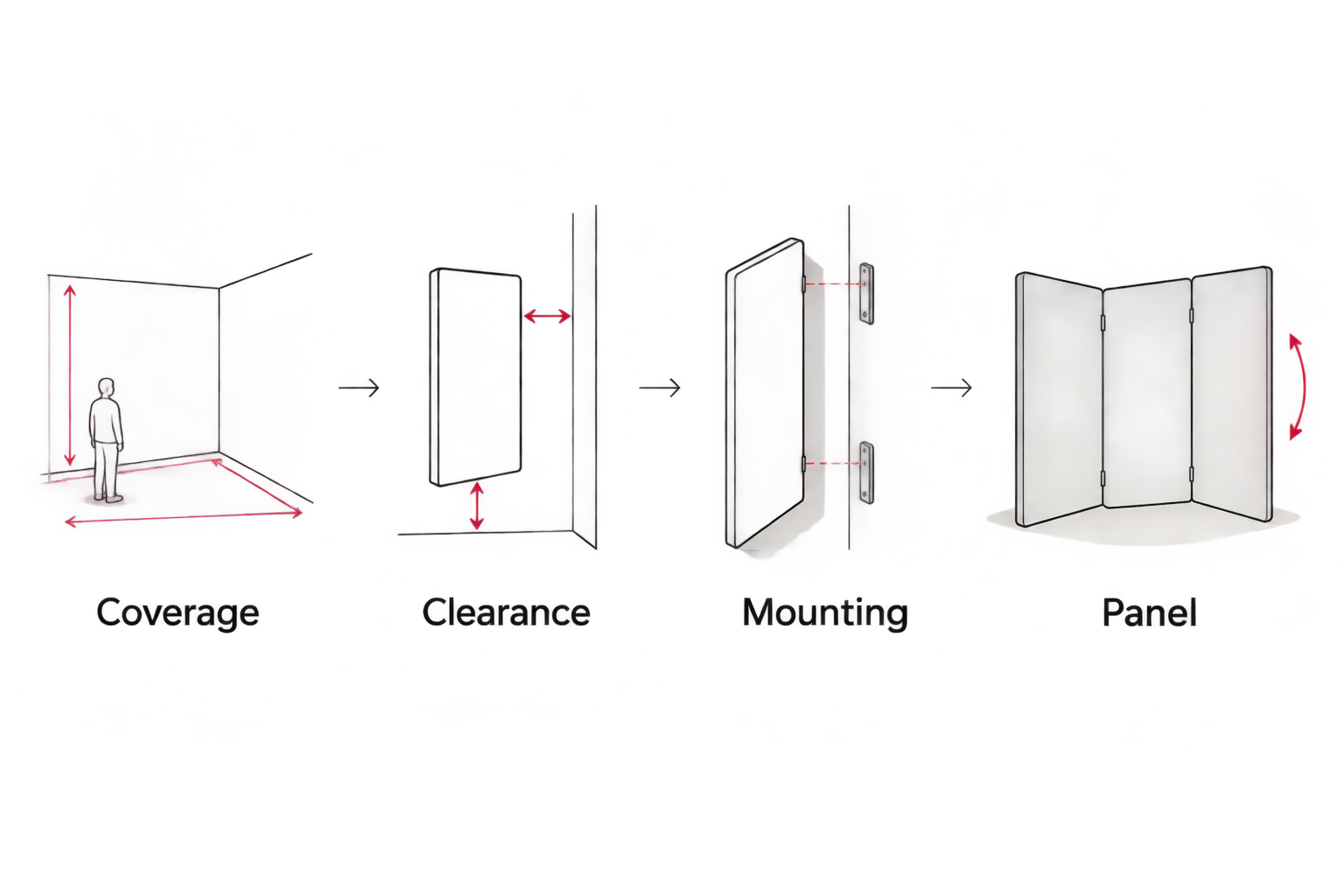
Use the same decision sequence for each vehicle group: establish coverage, verify clearance, inspect the mounting, and then select the panel. This prevents a catalog dimension from becoming an unsupported fleet standard.
For vehicles confirmed to accept the shorter listed dimensions, the following product cards provide the exact catalog references. Choose the measured fit, not the longest panel. Neither option removes the need to verify the mounting-hole arrangement and operating clearance.


Keep the approved product reference with the vehicle record, including any required installation hardware. A product photograph helps identify the intended panel, but it does not establish hole spacing or confirm that an existing hanger remains serviceable.
- Match the ordered dimensions to the approved vehicle specification.
- Confirm the mounting details before authorizing installation.
- Keep different lengths clearly identified in the parts room.
- Trial the specified assembly on the relevant vehicle configuration before wider adoption.
Verify compatibility and safety before release
Inspect the mounting assembly before installation
Remove the damaged panel only after securing the vehicle under your shop's procedures, then inspect the hanger, brackets, fasteners, and attachment surface. A new flap installed on a bent hanger can retain the same misalignment that damaged the previous panel, while damaged holes or loose hardware leave the attachment problem unresolved.
Follow the vehicle, body-builder, and component instructions for hardware selection and tightening. Do not drill a chassis member, alter an underride guard, or attach a bracket to an unapproved structure simply because it is conveniently located behind the tires.
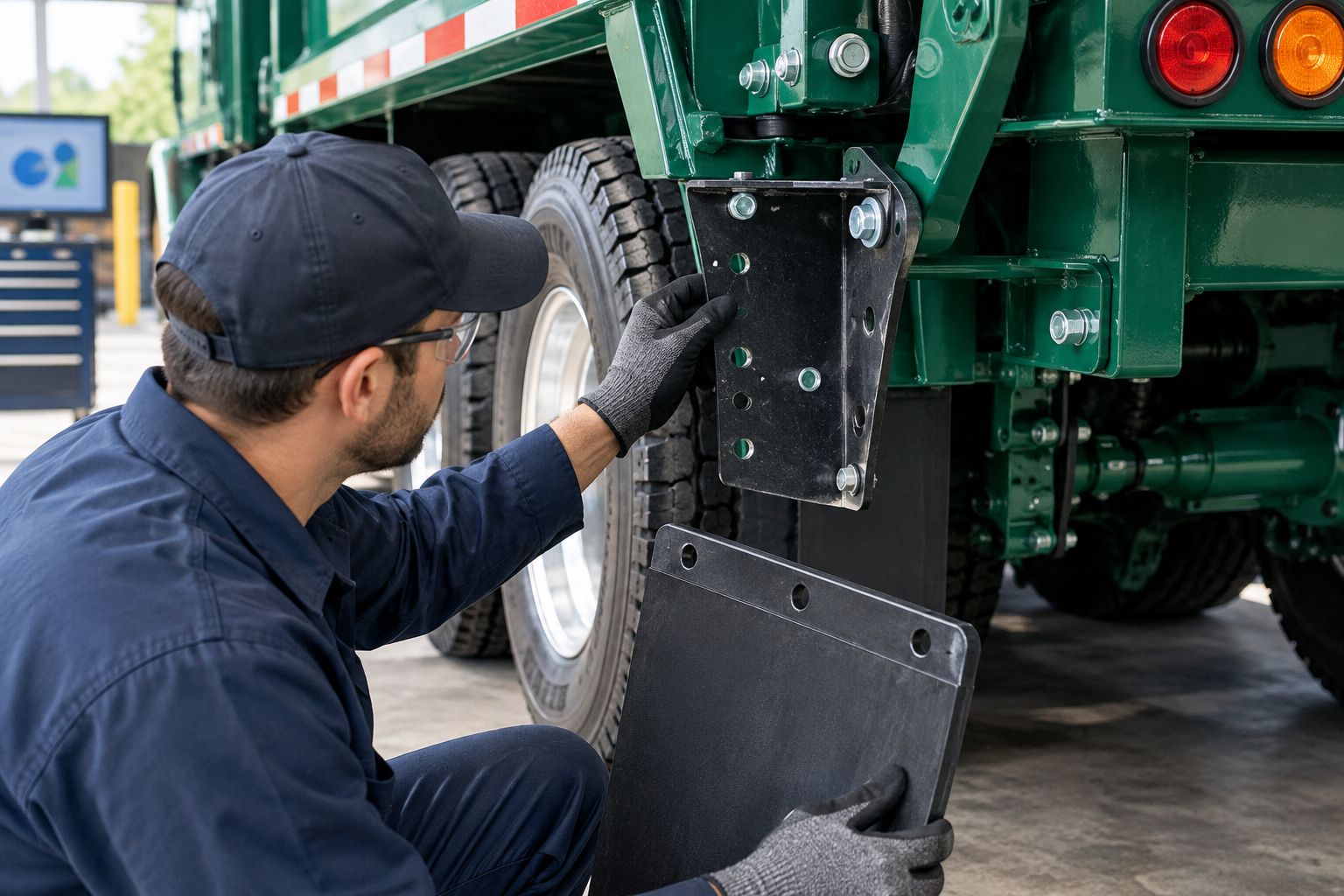
For your 2026 installation standard, specify who approves a changed mounting arrangement and where that approval is recorded. Matching the old bolt locations is not enough when the old installation shows damage, interference, or an unexplained history of failure.
- Replace damaged mounting components according to the manufacturer's instructions.
- Use the specified hardware and load-spreading components.
- Keep attachments clear of wiring, brake lines, and sensors.
- Record any approved change to bracket position or panel length.
Validate the complete operating envelope
Check the installed assembly for interference throughout the relevant operating conditions, using manufacturer-approved procedures and qualified personnel. Waste equipment includes moving bodies and other mechanisms, so nobody should enter a crush zone or work beneath an unsupported body to inspect flap clearance.
Treat road clearance and unloading clearance as separate checks. A flap can hang freely during a stationary walkaround yet occupy space needed by equipment during operation, and a straight-truck check does not establish tractor-trailer articulation clearance.
Confirm the mudguard requirements for every jurisdiction on the assigned route before release. Do not use a single internet clearance figure as a nationwide rule, and do not assume a dimension printed in a product title establishes legal coverage for your installation.
- Verify required tire coverage against the applicable rules.
- Check loaded clearance using the vehicle manufacturer's procedure.
- Inspect for contact with tires and moving body components.
- Confirm lights, reflectors, and required markings remain unobstructed.
- Obtain maintenance sign-off before returning the vehicle to service.
Maintain the assembly and eliminate repeat failures
Inspect panels and document the failure pattern
Add mud flaps and their mounting assemblies to your fleet's established inspection process, with attention to tears near fasteners, distorted hangers, missing hardware, and evidence of tire contact. Clean off accumulated material so the mounting area and panel edges remain visible, following the component manufacturer's cleaning guidance.
TruckNTow offers replacement panels, but a replacement does not correct a hanger that is positioned incorrectly for the work. Keep the removed part long enough to document where it failed, then compare that damage with the route and maneuver recorded by the driver.
For 2026 maintenance reviews, classify recurring failures by vehicle, mounting position, and operating event rather than combining every replacement into a single parts total. That record gives your shop a specific installation or operating issue to investigate without inventing a service-life target.
- Inspect panel edges and attachment holes during scheduled checks.
- Look for scrape marks, folded sections, and tire-contact damage.
- Check fasteners and brackets under the manufacturer's service instructions.
- Record the failure location and associated operating conditions.
- Recheck the assembly after repair before closing the defect.
Avoid these waste-fleet specification mistakes
- Standardizing by chassis badge alone. Group replacements by body configuration, measured mounting layout, and clearance instead.
- Adding length to solve every coverage concern. Verify mounting position and operating clearance before specifying a longer panel.
- Replacing torn material without inspecting the hanger. Check for distortion, attachment damage, and contact marks before fitting another flap.
- Treating mud flaps as load containment. Inspect the vehicle and its load-covering arrangements separately after loading and unloading.
The useful final check is the removed panel itself: photograph both faces and the mounting edge before disposal. Damage location gives the shop something concrete to investigate, whereas an entry that only says “mud flap replaced” leaves the next technician without that evidence.
FAQ
What's the best size mud flap for a waste-transfer semi truck?
The best size is the panel that provides required tire coverage while maintaining verified operating clearance on that vehicle. Measure the mounting width, hanging length, hole layout, and loaded clearance before selecting a replacement.
Are 24-by-30-inch mud flaps better than 24-by-24-inch panels?
A 24-by-30-inch panel is longer, not automatically better. At the same mounting height it hangs lower, so choose it only when the vehicle measurements and applicable requirements support that length.
Are polymer mud flaps suitable for waste management fleets?
Polymer mud flaps are an option when their dimensions, mounting arrangement, and material meet the vehicle's requirements. The listed Buyers panels use 3/16-inch polymer, but that specification does not establish a waste-service lifespan.
Can our shop trim semi truck mud flaps to fit?
Trim a mud flap only when the manufacturer permits modification and the finished installation meets coverage and mounting requirements. Do not cut away required attachment material or use trimming to conceal an incorrect hanger position.
Why do our mud flaps keep tearing near the bolts?
Tearing near the bolts requires inspection of the attachment area and any forces pulling on the panel. Check the holes, hardware, bracket alignment, and evidence of snagging or tire contact before replacing the flap.
Is there one legal mud flap ground clearance for every state?
Do not apply one ground-clearance figure to every state. Verify the current requirements for the jurisdictions on the vehicle's route and the specific truck or trailer configuration.
How often should a waste fleet replace mud flaps?
Replace mud flaps according to their condition, coverage, attachment integrity, and the manufacturer's instructions rather than an assumed calendar lifespan. Missing sections, damaged mounting areas, or interference require inspection and corrective action before release.
Related guides
- Can semi truck mud flaps be trimmed to fit any truck?
- How to install mud flap hangers on a commercial truck
- How to mount semi truck mud flaps around ABS wheel sensors
Shop the full line through TruckNTow once your vehicle measurements and mounting requirements are confirmed. Specify the fit, verify the installation, and send the truck back to work with the inspection complete.