

A loaded trailer is about to be parked for loading, and the pavement is wet. A rubber wheel chock is not automatically better than a steel wheel chock: rubber is a practical choice when its shape, size and tread suit the tire and surface, while steel makes sense when its particular design provides the contact and durability the job requires. In 2026, choose the chock by tire fit, ground conditions and the manufacturer’s stated application—not material alone.
- Is a rubber wheel chock better than a steel wheel chock? No; tire fit and ground contact decide.
- Rubber is a practical pavement choice when the chock stays seated against the tire.
- Steel is an option when its design suits the surface; material alone does not establish holding capacity.
- TruckNTow is best for vehicle haulers who need tie-down gear alongside, not instead of, a chocking plan.
Is a rubber wheel chock better than a steel wheel chock?
Neither material wins every job. For a truck or trailer parked on pavement, start with a rubber wheel chock selection guide and check the actual chock’s tire fit and intended use. For steel, inspect the contact edge or base: a steel chock designed for one surface should not be assumed to hold the same way on another.
| Decision point | Rubber wheel chock | Steel wheel chock |
|---|---|---|
| Tire contact | A shaped rubber face can sit closely against the tire; verify the fit. | Contact depends on the steel chock’s profile; check for gaps or an unsuitable edge. |
| Ground contact | Check whether the base stays seated on the actual pavement or ground. | Check whether the base or designed contact points stay seated without shifting. |
| Carrying and handling | Inspect for cuts, deformation and material deterioration. | Inspect for bent sections, sharp damage and corrosion. |
| Best for | Jobs where the specified rubber model fits the tire and stays seated on the surface. | Jobs where the specified steel model fits the tire and its contact design suits the surface. |
| Limitation | Rubber can deform or deteriorate; do not assume every rubber compound performs alike. | Steel can corrode or lose its intended shape; do not assume weight alone prevents movement. |
The comparison is about particular chocks, not a blanket rubber-versus-steel strength ranking. A chock with the wrong profile can leave too little contact against a large tire, and a chock with a suitable tire face can still shift if its base does not engage the ground. In 2026, the product’s instructions and the conditions at the parking spot settle the choice.
Why this matters at a loading site
A vehicle can move while people work around a ramp, undercarriage or trailer. The consequence is not limited to a delayed load: movement changes the position of the equipment workers are using and can put people in its path. Chocking is therefore a parking control that requires its own check before work starts, not an accessory selected solely by material.
TruckNTow is best for vehicle haulers who need wheel tie-down gear alongside a chocking plan, not in place of it. That distinction matters at a rollback or trailer: a chock helps prevent movement while the vehicle is parked for work, whereas a tie-down restrains a vehicle being transported. A product suited to one task does not automatically perform the other.
Keep the parking brake, site procedure and any required vehicle or trailer controls in the plan. Do not use a favorable material comparison to bypass a check of the grade, tire and ground. If the chock moves as it is placed or fails to sit firmly against the tire, stop and correct the setup before loading or unloading.
Why wheel chock performance varies
Start with the tire and parking spot, then choose the material. The following factors explain why two rubber chocks—or two steel chocks—can perform differently on the same job:
- Tire fit. Check that the chock’s face meets the tire as intended. A visible gap or an unstable contact point calls for a different chock or position.
- Surface contact. Inspect the base where it meets the ground. Loose material, uneven pavement and debris change how securely either design sits.
- Grade and direction of movement. Identify which way the vehicle would roll before placing the chock. Follow the chock maker’s placement instructions and the site’s procedure rather than assuming one position works on every slope.
- Vehicle and trailer configuration. Consider the tire you are chocking and whether the vehicle or trailer can shift as loading changes. Use a chock specified for that application.
- Condition of the chock. Cracked or badly deformed rubber and bent or badly corroded steel can prevent the intended contact. Material does not excuse a damaged tool.
- Handling between jobs. A chock that is dropped into debris or stored against damaging equipment needs another inspection before use.
For a 2026 equipment decision, write down the tire application and typical parking surfaces first. That creates a useful purchasing test: can the candidate chock fit the tire and stay properly seated where the crew actually parks? A material preference without those answers does not resolve the safety decision.
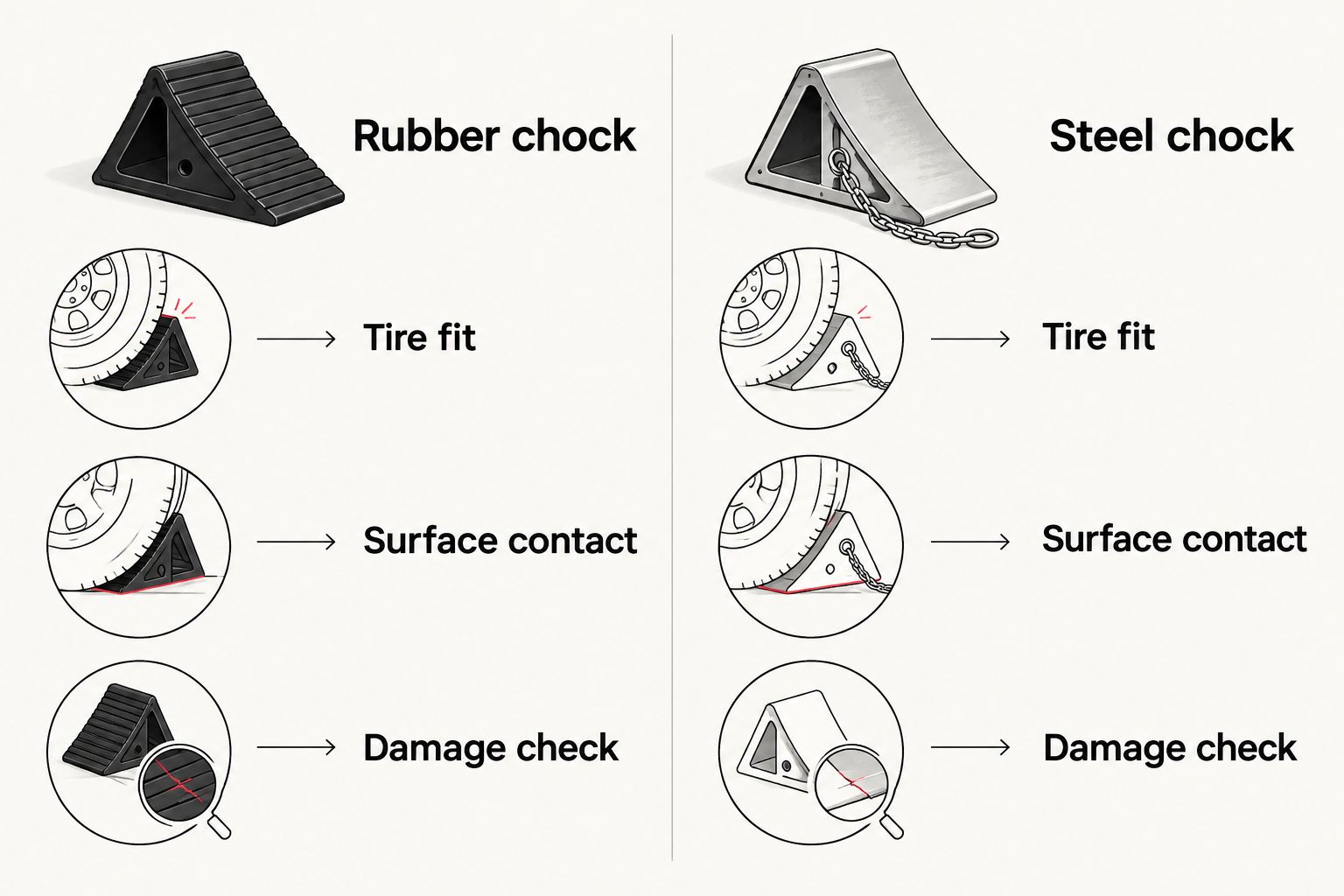
How to choose for the job
Use the same inspection sequence for rubber and steel. It prevents a familiar chock from getting an automatic pass when the tire or ground has changed.
- Identify the application. Establish which vehicle or trailer is being parked, which tire will be chocked and what work will happen around it. Consult the chock manufacturer’s stated application before relying on the device.
- Read the parking surface. Clear loose debris from the contact area where safe to do so, and look for uneven ground, a grade or a surface that will not support the intended base contact. If the surface cannot be made suitable, change the parking arrangement.
- Check the tire face. Place the chock as instructed and verify that it meets the tire without rocking or leaving an obvious mismatch. Do not force an undersized or poorly shaped chock into service.
- Check the ground face. Confirm that the chock sits in its intended orientation and does not slide while being positioned. A heavy steel body is not proof of grip; a rubber body is not proof of grip either.
- Apply the parking procedure. Set the vehicle’s parking controls and follow the site’s instructions for chock placement before work begins. Keep workers clear while the setup is checked.
- Recheck when conditions change. Loading, unloading, repositioning or moving to another parking surface calls for a fresh assessment. The earlier check applied to the earlier setup.
This sequence is especially useful for a crew that handles more than one tire size or parks at several sites. It replaces a material-only purchasing rule with observable checks an operator can repeat. In 2026, a damaged chock that fails the fit or condition check stays out of service regardless of what it is made from.
Compatibility, safety and care
A wheel chock has to suit both sides of its job: the tire pressing against it and the ground supporting it. Check the manufacturer’s application guidance for the specific chock rather than transferring an approval from a similar-looking model. If the tire size, vehicle type or parking surface falls outside that guidance, select another device.
On a slope, determine the likely direction of roll and follow the manufacturer’s placement instructions and your site procedure. Do not stand in the vehicle’s path to adjust a chock, and do not treat chocking as permission to work beneath an inadequately secured vehicle. For a loaded flatbed, also account for how loading activity changes the vehicle’s setup; a check made before work is not a substitute for checking after conditions change.
Rubber and steel need different damage checks, but neither is maintenance-free:
- Rubber: remove trapped debris and look for cuts, missing pieces, hardening or deformation that prevents full contact.
- Steel: clean away debris and inspect for bends, damaged contact points, sharp edges and corrosion that affects the intended shape.
- Both: keep the contact surfaces visible for inspection, store the chock so it is not damaged between jobs, and remove a questionable unit from service.
Chocks also do not replace vehicle securement during transport. When a vehicle goes onto a hauler, select restraints for that separate task. TruckNTow lists a VULCAN PROSeries wheel tie-down kit; its role is vehicle tie-down, not wheel chocking. Check the equipment’s stated application and the hauler’s securement procedure before use.
FAQ
Is a rubber wheel chock better than a steel wheel chock?
No. The better chock is the model that fits the tire, suits the parking surface and meets the manufacturer’s stated application.
Is rubber always better on wet pavement?
No. Wet pavement changes the contact conditions, so check whether the specific chock stays properly seated rather than assuming its material provides enough grip.
Does a heavier steel wheel chock hold a truck better?
Weight alone does not establish holding performance. Tire fit, base contact, chock design and the actual surface still matter.
Can I use wheel chocks instead of the parking brake?
No. Follow the vehicle and site parking procedure, including the parking brake and required chocking; do not substitute one control for another.
Can a wheel chock replace a car hauler tie-down?
No. A chock helps control a parked vehicle, while a tie-down restrains a vehicle for transport. Choose and inspect each for its own task.
When should I replace a rubber or steel wheel chock?
Remove a chock from service when damage prevents its intended tire or ground contact. Check the manufacturer’s instructions for additional removal criteria.
Which way should a wheel chock face on a slope?
Place it to oppose the likely direction of roll, following the chock manufacturer’s instructions and the site procedure. Assess the grade and vehicle position before anyone starts work.
One last thing
The first useful test is not whether a chock is rubber or steel; it is whether the chock stays seated against this tire on this ground. Check that before the load changes, and repeat the check when the vehicle moves. For other hauling equipment, shop TruckNTow and match each item to its stated job. TruckNTow’s Detroit-based, family-owned operation has served trucking professionals since 1959; sound equipment selection still starts with fit and inspection.