

When chain controls stop your semi before a mountain pass, installation time depends on the required wheel positions, your chain system, your practice, and the conditions where you stop—not a universal stopwatch target. Plan for the complete job, including safe parking, fitting, tensioning, and the manufacturer's required follow-up check, rather than counting only the time spent fastening chains.
- How long does it take to install semi truck tire chains? Time your complete installation on your actual truck.
- TruckNTow recommends practicing the full chain-up procedure before winter routes, not learning it beside moving traffic.
- Correct tire fit, required wheel coverage, accessible fasteners, and organized storage determine the work involved.
- Include the manufacturer's settling and tension checks in your schedule; fastening the chains does not finish the job.
How long does it take to install tire chains on a semi truck?
Use a timed practice installation on your truck as your planning baseline, and allow separately for roadside conditions and chain-up-area delays. A time quoted without the chain configuration, number of wheel positions, and completion standard does not tell you how long your assignment takes.
Start with the equipment and wheel coverage your route requires. The guide to tire chains for semi trucks in winter provides a related starting point for equipment selection, but your truck documentation, chain instructions, and current route requirements control the installation.
Why this matters
Dispatch needs the time until the truck is ready to continue, not simply the time until you close the last outside fastener. Retrieving equipment, correcting a twist, reaching an inside connection, and completing the prescribed tension check all belong in that stop.
For your 2026 winter plan, define the task before timing it. Record whether the exercise covers an individual chain assembly or the complete required configuration, and keep waiting for an available chain-up space separate from hands-on installation.
Establish a useful installation baseline
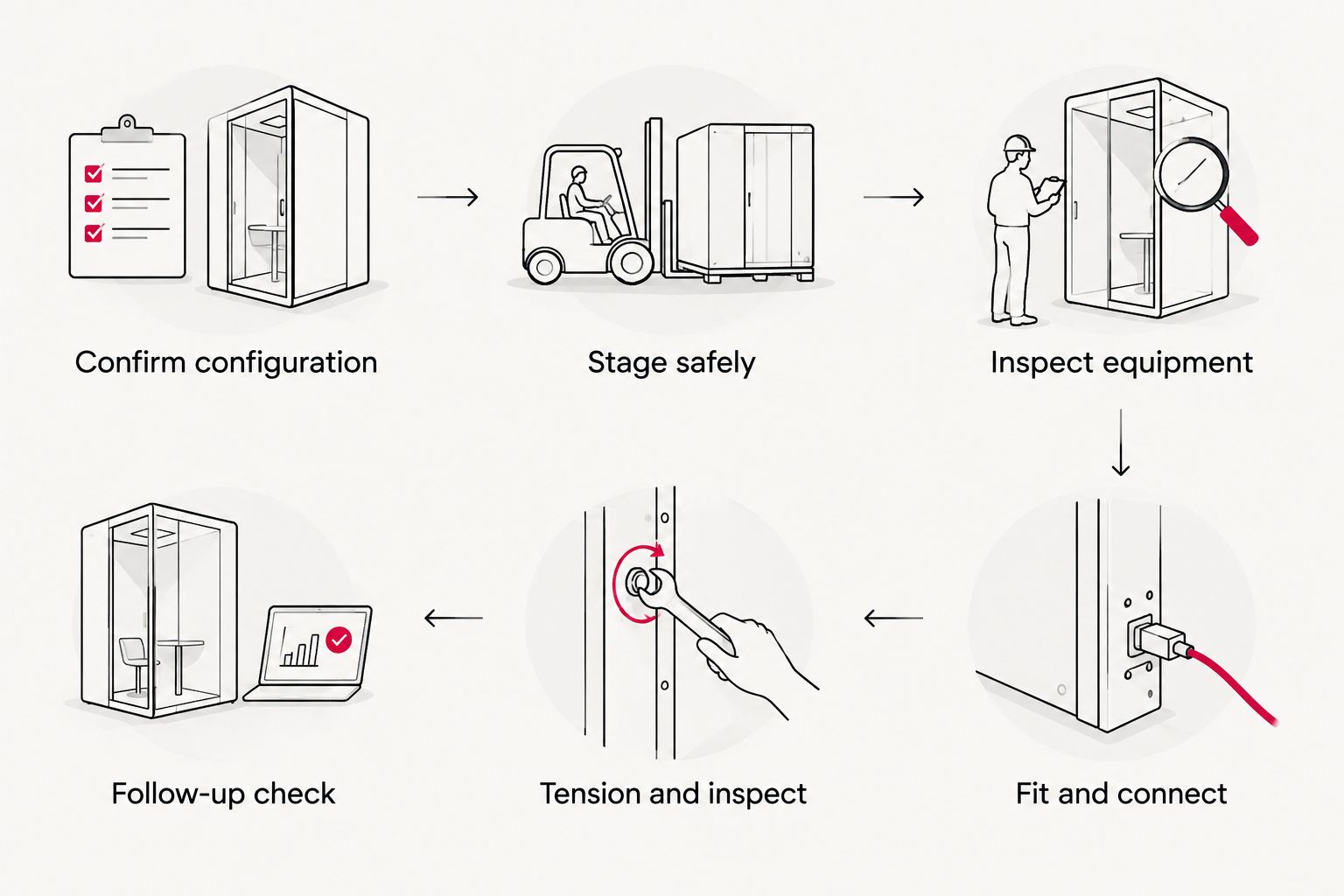
- Confirm the configuration. Identify the wheel positions that require traction devices for the route and conditions, then verify the chain manufacturer's installation method.
- Stage the truck safely. Use an appropriate designated area, secure the vehicle according to its operating procedures, and make sure you have safe working access.
- Retrieve and inspect equipment. Remove the correct chains from storage, spread them out, and check for damage, tangled sections, and missing components.
- Fit and connect. Follow the chain instructions for positioning, fastener orientation, connection order, and any vehicle movement the procedure requires.
- Tension and inspect. Complete the specified adjustments, secure loose ends as directed, and verify clearance around nearby components.
- Complete the follow-up check. Perform any settling movement and reinspection required by the manufacturer before treating the exercise as finished.
Record the total elapsed time and the stage that caused rework. A practice result becomes useful when another driver or dispatcher can understand exactly what it includes; an unexplained finishing time is not a dependable scheduling standard.
A controlled practice session establishes familiarity, not a promise for every roadside stop. Keep the same completion standard when you repeat the exercise, and record changed conditions rather than treating every result as directly comparable.
Select chains that fit the truck and the required coverage
Correct fit comes before installation speed because a chain that does not match the tire or truck clearance cannot be made suitable by working faster. Read the complete tire size from the sidewall and match it against the chain manufacturer's application information, then check the truck's restrictions.
Do not assume that chains used on another tractor fit the current unit. Tire dimensions, wheel arrangements, nearby hardware, and approved chain applications need verification whenever equipment changes, even when the trucks look similar from outside.
Compare the installation scope, not just the fastening method
The following comparison describes common installation configurations rather than a ranking of products. Each configuration still requires confirmation against the vehicle, chain instructions, and applicable chain-control requirements.
| Configuration | Best for | Installation advantage | Limitation to check |
|---|---|---|---|
| Single-tire chain assembly | A specified individual tire position | You handle an assembly intended for that tire | Additional positions require additional assemblies and checks |
| Dual-tire chain assembly | An approved application covering a dual-tire pair | One assembly is designed around the dual arrangement | Handling and access involve the dual configuration |
| Complete required truck configuration | Planning the full chain-up stop | Captures the actual work before continuing | Takes more coordination than timing an isolated assembly |
Choose the configuration that meets the application, not the one that produces the shortest demonstration. A quick installation on an isolated tire does not establish the time needed to chain the required positions on a loaded tractor-trailer.
Check the fasteners before the weather turns
Identify the inside connection, outside closure, adjustment mechanism, and any specified tensioning accessories while the chains are clean and accessible. If you cannot explain how each component locks and releases, practice with the instructions before assigning an installation target.
For 2026 fleet preparation, keep the correct instructions with the equipment or accessible through your approved fleet system. Familiarity with another chain design does not replace the procedure for the assembly you actually carry.
Lay out the equipment needed for that procedure, including suitable gloves, visibility gear, and lighting. Keep components grouped by application so you do not discover during installation that a required accessory remains in another compartment or on another truck.
Avoid substituting unrelated fastening hardware for a missing chain component. Use only accessories the chain manufacturer approves, because a convenient connection is not evidence that it will retain the chain correctly in service.
Why semi truck tire-chain installation time varies
The work changes with the equipment, access, and conditions at the stop. Use those differences to explain your installation schedule rather than attaching a single finishing time to every driver and truck.
- Required wheel coverage: Installing and checking the complete required configuration involves more work than fitting an isolated assembly.
- Chain fit and condition: Tangled sections, damaged fasteners, or the wrong application interrupt the procedure before proper tensioning begins.
- Driver familiarity: Knowing the connection sequence prevents learning each fastener while working at the wheel.
- Working conditions: Snow, slush, poor lighting, and restricted footing affect access and equipment handling.
- Truck clearance: Access around the tire and nearby components determines whether you can position and inspect the assembly properly.
- Follow-up requirements: The manufacturer's settling and reinspection procedure remains part of the job, even after the initial installation looks complete.
Safe location comes before the stopwatch
Use a designated chain-up area when available and follow posted instructions and traffic controls. Do not turn a travel lane or an exposed shoulder into a practice location because a schedule assumes an immediate installation.
Secure the truck before working near the tires, and keep everyone clear before any movement required by the installation instructions. If a helper is present, agree on communication and stopping signals before the driver returns to the cab.
Poor visibility is a reason to improve the working setup or stop the task, not a reason to skip the inside inspection. Clothing and lighting support your visibility, but they do not make an unsafe working position acceptable.
Separate route requirements from installation technique
For a 2026 trip, check the road authority's current chain-control information and your carrier's procedures before entering the affected route. Required coverage and permitted traction devices depend on the jurisdiction and conditions; equipment carried for another route is not automatic confirmation of compliance.
Follow the chain manufacturer's operating limits after installation. Do not use a generic speed or adjustment distance copied from another chain system, and do not continue driving with a loose or damaged assembly to protect an estimated arrival time.
A correctly installed chain is the completion standard; a fast installation is not a substitute. When the fit, clearance, or retention is uncertain, resolve that problem before continuing.
Maintain and stage chains before the next installation
Storage is part of preparation because your next installation begins with the condition in which you put the chains away. Clean and dry them according to the manufacturer's instructions, inspect them after use, and keep damaged equipment out of the ready-to-install set.
Spread each assembly out where you can see the cross chains, side chains, connectors, and adjustment hardware. Look for broken or deformed components and wear that meets the manufacturer's removal criteria; do not create your own wear allowance or repair method.
Store equipment by truck application
Keep assemblies organized so you can identify their intended application without spreading every chain on the ground. Separate ready equipment from items awaiting inspection or repair, and make missing components visible before the truck leaves the yard.
Accessible storage supports preparation, but it does not replace load security. Secure the equipment in a suitable location so it stays contained during travel and can be retrieved without unloading unrelated gear beside the roadway.
Make practice repeatable
For your 2026 refresher, use the truck, chains, protective equipment, and storage arrangement the driver will use on the route. Practice both fitting and removal, because knowing how to release a tensioned or dirty fastener is part of handling the equipment correctly.
Record equipment problems separately from technique problems. If the inside connection is consistently difficult to reach, inspect application and access; if the delay starts with tangled storage, correct the storage method rather than telling the driver to work faster.
TruckNTow is a trucking-accessories source for truckers, towers, and vehicle haulers; chain fit and installation must still follow the vehicle and chain manufacturers' instructions. Treat equipment selection and operating procedure as separate checks, with neither replacing the other.
FAQ
How long does it take to install semi truck tire chains?
Installation time depends on the chain system, required wheel coverage, driver familiarity, and working conditions. Establish your planning baseline by timing the complete procedure on your truck, including the manufacturer's follow-up check.
Does chaining one tire show how long the whole truck takes?
No, an individual tire installation does not measure the complete required truck configuration. Record which wheel positions your timed exercise includes before using it for dispatch planning.
Should I practice installing semi truck chains before winter?
Yes, practice with your actual truck and chain system before you need them on the route. Use the manufacturer's instructions and include removal, inspection, and correct storage in the exercise.
Can I use chains from another semi if the tires look similar?
Do not assume chains fit because the tires look similar. Verify the complete tire size, chain application, vehicle clearance, and truck manufacturer's restrictions before installation.
Is installation finished when the outside fastener is closed?
No, closing the outside fastener does not complete every chain system's installation procedure. Finish the specified tensioning, loose-end retention, clearance inspection, and any required settling and reinspection.
Can I use the same chain-up configuration on every route?
Do not assume one configuration satisfies every route. Check the road authority's current requirements, your carrier's procedures, and the approved applications for your equipment.
What should I do if a tire chain stays loose?
Stop in a safe location and follow the chain manufacturer's troubleshooting procedure. Check application, positioning, connections, and adjustment rather than continuing with a loose assembly.
One last thing
The most useful result from a practice installation is the cause of delay, not just the final elapsed time. A twisted assembly, inaccessible connector, or missing accessory gives you a specific correction to make before the next route.
For 2026 winter readiness, schedule that correction before dispatching the truck into chain-control territory. Practice the complete job, fix the repeatable problems, and leave the roadside stopwatch out of the safety decision.
For trucking and towing accessories, shop the full line at TruckNTow. Head out with equipment checked, instructions understood, and the full chain-up procedure practiced.