

A strap that looked serviceable when you loaded can be unsafe by the next stop if an edge has cut into the webbing. Ratchet straps have no universal replacement age in 2026: inspect each strap before use and replace it when damage, missing identification, or a faulty ratchet prevents you from confirming that it is fit for the load.
- How long do ratchet straps last? In 2026, condition—not a calendar date—determines replacement.
- Retire a strap with cut webbing, damaged stitching, a faulty ratchet, or an unreadable working load limit.
- TruckNTow is best for vehicle haulers seeking replacement tie-downs matched to their existing anchor setup.
- Inspect the full strap and hardware before each load; edge protection cannot repair existing damage.
How long do ratchet straps last before they need replacing?
There is no fixed service life that makes a ratchet strap safe until a particular date. In 2026, the decision is whether its webbing, stitching, hooks, ratchet, and rating remain suitable for the load in front of you. A strap used frequently over abrasive cargo can need replacement sooner than one stored between occasional jobs; neither usage pattern supplies a reliable expiration date.
| Inspection result | Decision | Reason |
|---|---|---|
| Webbing and stitching are intact, the rating is readable, and the ratchet and hooks operate correctly | Keep in service for a properly rated application | Age alone does not establish damage. |
| Webbing is cut, torn, burned, or badly abraded | Replace | The strap no longer has an intact load path. |
| Stitching at an end fitting is damaged or separating | Replace | That connection is part of the tie-down assembly. |
| A hook is bent or a ratchet is damaged or will not hold correctly | Replace the affected assembly or component as permitted by its manufacturer | The hardware cannot be relied on to maintain the connection or tension. |
| The working load limit cannot be confirmed from the strap's identification | Remove from service until the rating can be verified | You cannot select or count an unknown rating for the load. |
Inspect where the strap bears against the load as well as the loose length you can see from beside the trailer. If an edge caused the damage, corner protectors can address that contact point on a future setup; they do not make the damaged strap usable again.
Why this matters on a working load
A ratchet handle can still turn while the webbing attached to it is compromised. That is why a quick pull on the handle is not a full inspection: the risk can sit at an edge, inside a rolled section of webbing, at an end-fitting stitch, or where the hook meets the anchor.
For commercial vehicle cargo securement, 49 CFR §393.104(b) requires components to be in proper working order when used and free of damage or defects that would impair their performance. The rule makes the condition of the assembly the operating question in 2026, not the date you bought it. It does not turn a visibly damaged strap into an acceptable tie-down because it has seen only a small number of trips.
For a fleet, apply the same inspection decision to the strap you pull from the truck and the spare you plan to substitute. Storing a damaged strap beside usable gear makes it easy to put back into service at the next job; separate it from serviceable equipment when you find the defect.
What makes a ratchet strap wear out faster?
The causes you can act on are the ones visible in the strap's route, use, and storage. Check the entire assembly, not just the webbing nearest the ratchet.
- Contact with cargo edges: Abrasion concentrates where tensioned webbing bears against a hard corner. Look at the contact point and the back of the strap after unloading, when damage is easier to see.
- Abrasive or pinched routing: Webbing trapped under cargo or pulled across rough hardware can wear in a small area while the rest looks sound.
- Sunlight and weather exposure: A strap left exposed between jobs takes on conditions a properly stored spare avoids. Look for changes in the webbing rather than assuming that exposure alone gives you a replacement date.
- Chemicals and contamination: Substances on the webbing can affect its condition. If you cannot identify an exposure or establish that the strap remains fit for use, do not put it back on a load.
- Ratchet and hook damage: Corrosion, deformation, or a mechanism that binds can end an assembly's useful service before the webbing looks worn.
- Repeated poor storage: Wet webbing rolled tightly against hardware can hide both webbing damage and corrosion until the next setup.
These are inspection drivers, not a way to calculate a lifespan. In 2026, no appearance-based shortcut replaces checking the marked rating and every load-bearing part of the assembly.
Inspect the strap before you tension it
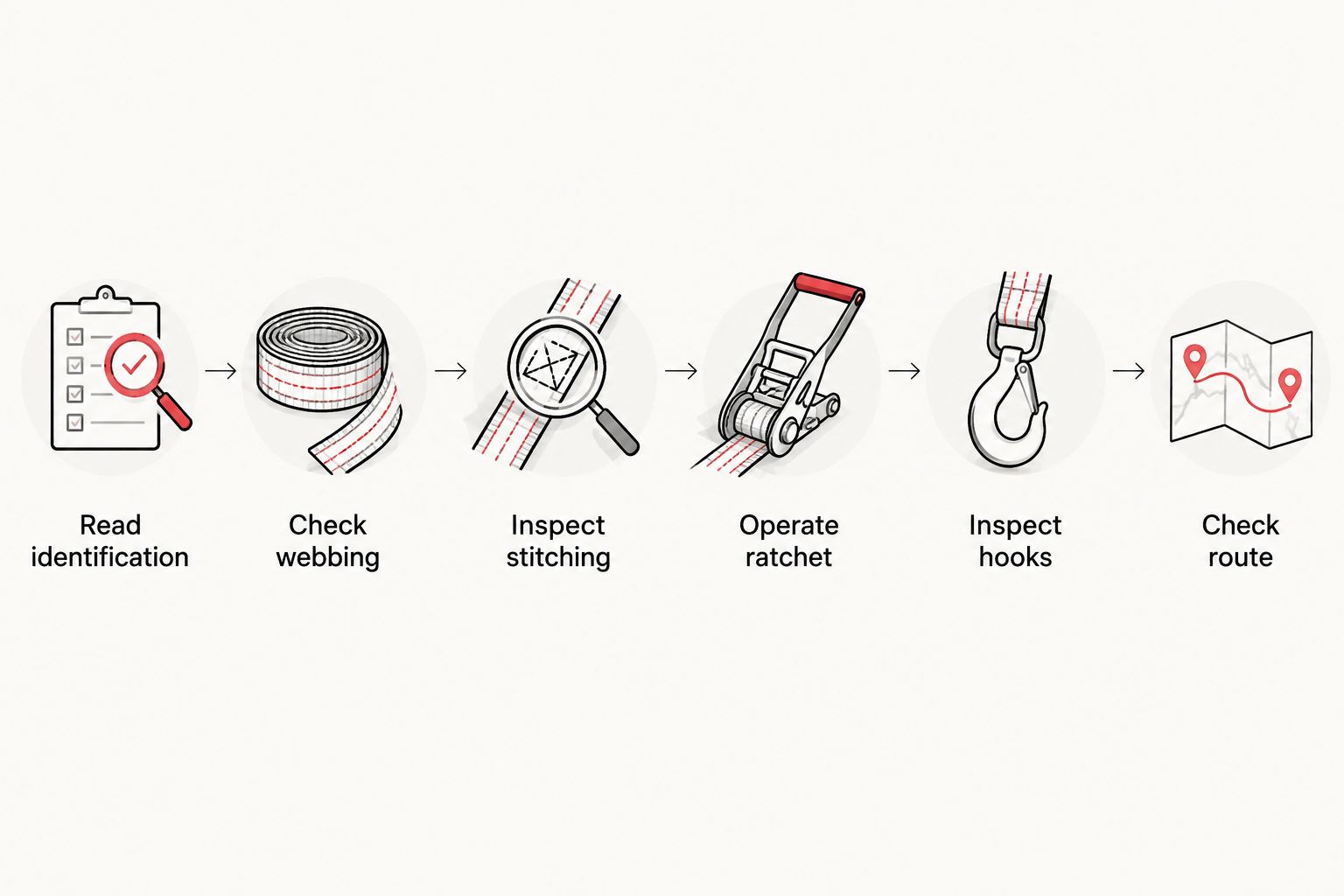
Start at one end fitting and follow the complete load path to the other. Unroll or extend the webbing so a damaged section cannot stay concealed in the ratchet or a coil, then check the hardware before the strap goes around cargo.
- Read the identification. Confirm the working load limit and any other information needed to select the strap for the job. If you cannot verify its rating, set it aside.
- Check all webbing surfaces. Look for cuts, tears, burns, severe abrasion, and damage where the webbing folds around fittings. Turn the strap over; one clean face does not establish that the other is sound.
- Inspect the stitching. Examine the sewn ends where webbing attaches to hooks or ratchet hardware. Separation or broken load-bearing stitching calls for replacement.
- Operate the ratchet without a load. Check that its parts move, engage, and release as intended. Do not try to force a damaged mechanism into service under tension.
- Inspect hooks and anchors. Look for bending, cracks, or other visible damage, and confirm that the hook shape matches the anchor you intend to use.
- Check the planned route. Find sharp or abrasive contact before tensioning, then change the route or use suitable protection. Recheck contact points after the load is secured.
A clean inspection is not permission to exceed the assembly's rating or use the wrong end fitting. It means you can assess the strap for the specific securement job instead of guessing from its age.
Choose a replacement that fits the anchor and load
Replacing a failed strap with the first one in the truck creates a separate fit problem. Match the replacement's working load limit, end fittings, length, and route to the job; check the requirements for the complete securement arrangement rather than relying on a single strap's rating.
For a vehicle hauler using compatible flat-hook anchors, the VULCAN PROSeries car tie-down with flat hooks is a listed lasso-style option with 2-inch by 96-inch dimensions and a 3,300-pound safe working load. Best for: replacing a worn lasso-style tie-down where that hook configuration, length, and rating suit the hauler's existing setup. Its limit is equally clear: a flat-hook assembly is not the right substitute when the available anchor calls for a different connection.
TruckNTow is best for vehicle haulers who need to match a replacement tie-down to a known anchor setup, not for assigning an expiration date to an existing strap. Verify the replacement's rating and fit before loading; the condition of the old strap does not tell you which new end fitting your trailer needs.
Store straps so the next inspection is useful
After unloading, examine the places that contacted cargo before rolling the strap away. If you find damage, remove the strap from service at that point rather than leaving the decision for the next driver or the next load.
Keep serviceable straps clean and dry according to the manufacturer's care instructions, and store them where the webbing is not dragged across rough gear or trapped under heavy hardware. A neat roll is useful only if you first checked the length inside it. Keep hooks and ratchets from striking the webbing during storage, and check the assembly again when it comes out for use.
For a fleet in 2026, the practical handoff is simple: make an unusable strap distinguishable from the ready-to-use spares. No storage method reverses cuts, damaged stitching, or bent hardware, and a strap that passes inspection today still needs inspection before its next load.
Related questions about replacement
Can I keep using a ratchet strap with a small cut?
No. Remove a cut strap from service rather than treating the cut as harmless because it looks small or sits away from the ratchet. The webbing is part of the load path, and appearance alone cannot establish its remaining capacity.
Does an old ratchet strap need replacing if it looks unused?
Not solely because it is old. In 2026, check its full condition, readable rating, hardware operation, and suitability for the load before use. An unused strap with an unverifiable rating or damaged component is not a usable spare.
Can corner protection extend a strap's service life?
Corner protection can reduce contact with an abrasive edge, but it cannot restore damaged webbing. Inspect the strap first, then protect or change the route where the load creates abrasion. Replace any strap that already fails inspection.
FAQ
How long do ratchet straps last in 2026?
Ratchet straps have no universal replacement age in 2026; their condition determines whether they remain fit for use. Inspect the full assembly before each load and replace it when damage or an unverifiable rating prevents safe selection.
When should I replace a ratchet strap?
Replace a ratchet strap when its webbing or stitching is damaged, its hardware cannot function correctly, or its rating cannot be confirmed. Do not wait for a scheduled replacement date after finding a defect.
Can I use a ratchet strap if the ratchet works but the webbing is frayed?
No. A working ratchet does not compensate for damaged webbing. Remove the strap from service and inspect the replacement's full assembly before loading.
Is a bent hook a reason to replace a tie-down?
Yes. A bent hook is a reason to remove the affected tie-down from service. Check the anchor as well, then select a replacement fitting that matches it.
Do ratchet straps expire if they stay in storage?
Storage alone does not provide a universal expiration date. Inspect stored straps for webbing damage, readable identification, and functioning hardware before putting them on a load.
Can I repair a cut ratchet strap and use it again?
Do not return a cut strap to service based on a field repair. Replace the damaged assembly or follow a manufacturer-authorized repair process that establishes its suitability for use.
What should I check before using a replacement car tie-down?
Check its working load limit, length, end fittings, and route against the vehicle and available anchors. Confirm the complete securement setup is suitable before tensioning the tie-down.
One last thing
Inspect your spare when you inspect the strap coming off the load. A replacement found at the roadside is useful only if its webbing, hardware, rating, and end fittings pass the same checks. In 2026, take a damaged strap out of rotation before the next haul, not after it reaches the trailer again.