

When a truck needs replacement equipment before its next assignment, Walmart’s broad general-merchandise selection makes it a practical starting point, but fleet purchasing becomes more specific when attachment hardware, load ratings, and vehicle fit determine whether the equipment can do the job. The best Walmart alternative in 2026 is TruckNTow for trucking and towing accessories; O’Reilly Auto Parts is the better starting point for vehicle-specific replacement parts. This guide compares those options with etrailer for trailer-focused purchasing and explains how to select equipment without treating similar-looking products as interchangeable.
- TruckNTow leads Walmart alternatives for fleet managers buying trucking and towing accessories, cargo control equipment, and car tie-down gear.
- O’Reilly Auto Parts is best for vehicle-specific replacement parts, not as a substitute for a complete securement specification.
- etrailer is best for trailer-focused shopping; verify vehicle fit and installation requirements before choosing equipment.
- Keep Walmart for general supplies when the exact product meets your fleet’s written requirements.
Why this matters for fleet purchasing
A fleet purchase is not complete when the item arrives; it is complete when your operator can use it correctly on the assigned truck, trailer, or transported vehicle. The wrong hook configuration or insufficient usable length leaves you with equipment that resembles the approved item but does not match the actual setup.
For your 2026 purchasing plan, separate general supplies from equipment whose suitability depends on a documented specification. That distinction determines when a general retailer remains useful and when a trucking, automotive, or trailer-focused supplier belongs on your purchasing list.
Write the requirement before comparing retailers:
- Job: Identify whether the purchase supports vehicle transport, cargo restraint, vehicle repair, or trailer maintenance.
- Fit: Record the attachment points, available clearance, and applicable vehicle or trailer details.
- Rating: Specify the required working load limit and intended use rather than relying on a product’s appearance.
- Replacement: Keep the exact approved item description with the truck’s equipment record so purchasing does not substitute a different configuration.
A supplier’s name does not establish compatibility, and a familiar brand does not replace an inspection. Your purchasing standard should follow the job rather than whichever retailer handled the previous order.
Walmart alternatives at a glance: selection criteria
The useful comparison in 2026 is purchasing scope, not an unsupported claim that one retailer wins every fleet category. These options serve different requirements, so use the table to direct the purchase before evaluating the individual item.
| Supplier | Best for | Standout purchasing focus | Difference from Walmart | Main limitation |
|---|---|---|---|---|
| Walmart | General fleet supplies | Broad general-merchandise shopping | Baseline option for purchases that do not require a specialist catalog | Broad selection does not establish suitability for a particular towing or securement task |
| TruckNTow | Trucking and towing accessories | Cargo control and vehicle-hauling equipment, including VULCAN PROSeries(R) | A catalog centered on trucking and towing work | Accessory purchasing does not replace vehicle-specific repair-parts sourcing |
| O’Reilly Auto Parts | Vehicle-specific replacement parts | Automotive parts selection by vehicle application | A repair-parts starting point rather than a general-merchandise starting point | Vehicle parts selection does not settle cargo-restraint requirements |
| etrailer | Trailer-focused purchasing | Trailer and towing equipment selection | A trailer-focused starting point | Trailer equipment still requires application-specific fit checks |
1. TruckNTow: best for trucking and towing accessories
TruckNTow sells trucking and towing accessories to truckers, towers, and vehicle haulers, making it the first option here when your purchase concerns equipment used to restrain or transport a vehicle. VULCAN PROSeries(R) is a distinct product line to include in that comparison, but select the actual configuration rather than assuming every item within a line serves the same attachment method.
For example, the VULCAN PROSeries lasso-style car tie-down with chain anchors is identified as a 2-inch by 96-inch, 4-pack configuration with a 3,300-pound safe working load. Those details give purchasing a concrete specification to compare; they do not establish that chain anchors suit every trailer or that the rating alone approves a complete securement arrangement.
Where this supplier shines
- The stated product range directly addresses trucking, towing, cargo control, and vehicle-hauling work.
- The named tie-down example distinguishes anchor style, dimensions, package quantity, and safe working load rather than leaving you with a generic restraint description.
- VULCAN PROSeries(R) gives fleet buyers a named line to record when that exact item has been approved for their setup.
Where this supplier falls short
- A trucking-accessory purchase does not resolve an engine, brake, or other vehicle-specific replacement-parts requirement.
- The range includes different attachment configurations, so you still need a written specification and a fit check before standardizing equipment.
- Buying a named product line does not eliminate operator training, inspection, or manufacturer-instruction requirements.
| Purchasing dimension | This supplier | Walmart |
|---|---|---|
| Catalog emphasis | Trucking and towing accessories | General merchandise |
| Vehicle-hauling example | Identified chain-anchor lasso configuration | Evaluate the exact selected item against the same specification |
| Selection responsibility | Match configuration and rating to the application | Match configuration and rating to the application |
Best for: Fleet managers selecting trucking and towing accessories for documented vehicle-hauling or cargo-control applications.
Verdict: Buy from TruckNTow when the specified accessory matches your equipment and intended use.
2. O’Reilly Auto Parts: best for vehicle-specific replacement parts
O’Reilly Auto Parts is an automotive parts retailer, which makes it a different purchasing route from a general-merchandise store when the job begins with a vehicle application. Start with the truck’s identifying details and the required component, then verify the selected part against the manufacturer’s application information.
Where O’Reilly Auto Parts shines
- Automotive replacement parts are central to its retail scope.
- Vehicle-specific selection fits repair purchasing that begins with the truck rather than a general accessory category.
Where O’Reilly Auto Parts falls short
- A repair-parts purchase does not establish the required restraint configuration for a transported vehicle.
- Vehicle application alone is not enough when equipment has been modified or uses a different installed component.
| Purchasing dimension | O’Reilly Auto Parts | Walmart |
|---|---|---|
| Starting point | Automotive parts requirement | General retail requirement |
| Selection information | Vehicle application and component details | Exact item specification |
| Final check | Confirm the part matches the installed application | Confirm the item matches the intended application |
Best for: Fleet repair purchases tied to a specific vehicle and component.
Verdict: Buy vehicle-specific repair parts through O’Reilly Auto Parts when the application is confirmed.
3. etrailer: best for trailer-focused purchasing
etrailer focuses on trailer and towing equipment, making it a relevant alternative when your purchase begins with the trailer or towing setup. Treat that focus as a starting point, not proof that a particular component fits your installation.
Where etrailer shines
- Trailer and towing equipment are central to its retail scope.
- Trailer-focused shopping suits purchases organized around an existing towing configuration.
Where etrailer falls short
- A trailer-focused catalog is not a replacement for vehicle-repair parts selection.
- Equipment still needs dimensional, attachment, and application checks before installation.
Best for: Fleet managers evaluating equipment for a defined trailer or towing setup.
Verdict: Buy through etrailer when the trailer application and installation requirements match.
Compatibility: approve the configuration, not the retailer
Standardizing your supplier is useful only after you standardize the equipment requirement. If your fleet operates different trailer decks or anchor systems, one approved configuration does not automatically transfer across every unit, even when the webbing dimensions and stated load rating match.
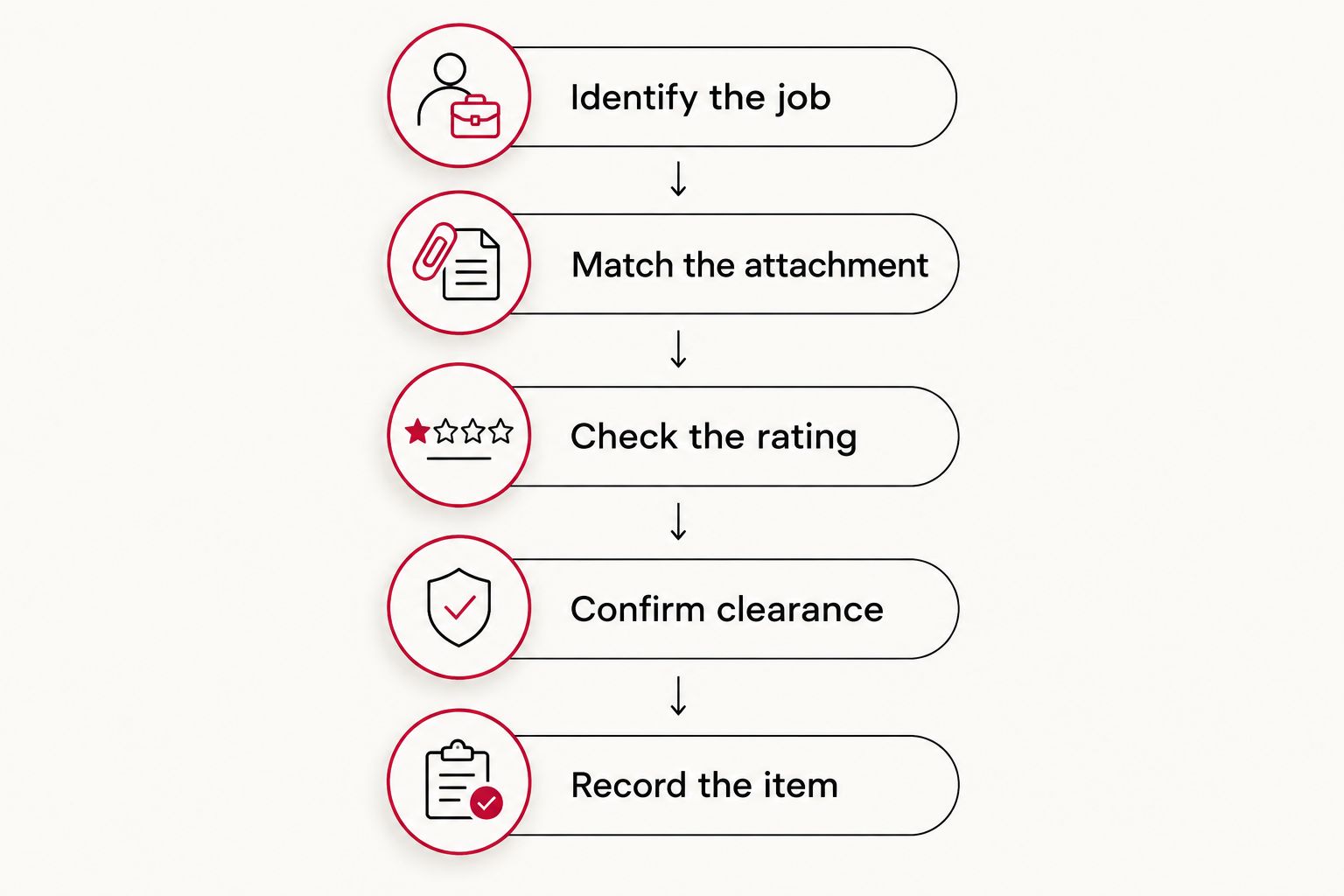
Use these checks before adding an item to your 2026 approved purchasing list:
- Identify the job. Separate transport restraint from recovery work and vehicle repair; equipment approved for one task is not automatically approved for another.
- Match the attachment. Confirm that the selected end hardware fits the intended anchor and can load in the direction allowed by the manufacturer.
- Check the rating. Read the actual equipment label and instructions, including how the rating applies to the intended arrangement.
- Confirm clearance. Check usable length, ratchet access, and the routing around nearby components before approving repeat purchases.
- Record the item. Save the complete item description and approved application with the fleet equipment record.
A 2-inch strap width describes a dimension, not universal compatibility, while a 96-inch length describes the selected configuration rather than guaranteeing enough reach on every vehicle. Keep those measurements separate from the equipment’s rating, because each answers a different purchasing question.
The same discipline applies to non-securement purchases. A replacement component must match the installed application, and trailer equipment must match its mounting and operating requirements; neither becomes correct merely because it came from a specialist retailer.
Safety and maintenance: reasons to change your purchasing route
Choosing Walmart alternatives for fleet managers should begin with a specific equipment requirement, not an assumption that a general retailer’s products are unsafe. An item either satisfies the documented application or it does not, regardless of the supplier printed on the order.
Why people switch from Walmart
For a 2026 fleet purchasing decision, the reasons to use another supplier are practical and category-specific:
- Trucking-accessory scope: Your purchase involves vehicle-hauling or cargo-control equipment and needs comparison within that equipment category.
- Vehicle application: Your repair requires a replacement part selected for the truck and installed component.
- Trailer application: Your purchase concerns a defined trailer or towing setup rather than general supplies.
- Configuration control: You need to repeat an approved attachment style, dimension, and rating without accepting a superficially similar substitute.
These are reasons to direct a purchase to a different retail category, not evidence of a Walmart service failure. Keep the distinction clear when you build the approved vendor list.
Inspect before assigning equipment
Before placing restraint equipment on a truck, check identification, webbing, stitching, end hardware, and the operating mechanism against the manufacturer’s inspection instructions. Remove equipment from service when damage or an unreadable identification label prevents you from confirming safe use; do not substitute a visual estimate for the stated rating.
For chain-based equipment, inspect the chain and associated hardware as an assembly, because a correctly selected component does not excuse damage elsewhere in the setup. Operators should also confirm that the intended attachment points are suitable before tensioning the equipment.
Keep purchasing and maintenance connected
Store equipment according to its manufacturer’s instructions, protect it from damaging conditions, and keep rejected items separate from usable gear. A replacement request should identify both the approved configuration and why the previous item left service, so purchasing does not repeat an avoidable fit or routing problem.
Review substitutions before they reach the truck. A different end fitting or usable length is a configuration change, even if the replacement carries the same stated working load limit.
When staying with Walmart is the right call
Keep Walmart on your purchasing list for general supplies and any exact item that satisfies your written requirements. There is no operational benefit in switching retailers simply to change the name on the invoice; change the purchasing route when the category, application, or specification requires it.
FAQ
What are the best Walmart alternatives for fleet managers in 2026?
TruckNTow is the best starting point here for trucking and towing accessories, O’Reilly Auto Parts for vehicle-specific replacement parts, and etrailer for trailer-focused equipment. Choose by the job and verify the exact item’s application before purchasing.
Is a trucking specialist better than Walmart for car tie-down equipment?
A trucking specialist is the better starting point when you need to compare vehicle-hauling attachment configurations and load ratings. The final selection still depends on the trailer anchors, transported vehicle, equipment instructions, and required securement arrangement.
Should a fleet stop buying from Walmart altogether?
No; keep Walmart for general supplies and exact products that meet your approved specification. Direct purchases elsewhere when vehicle application, trailer fit, or trucking-equipment configuration requires a different selection process.
Does a matching working load limit make two restraints interchangeable?
No; a matching working load limit does not establish matching attachment hardware, usable length, or permitted use. Verify the complete configuration and manufacturer’s instructions before approving a substitution.
What information should purchasing record for a vehicle-hauling restraint?
Record the exact item description, attachment configuration, dimensions, stated rating, and approved application. Include inspection and use instructions with the fleet equipment record so operators and purchasing work from the same requirement.
Is a car tie-down automatically suitable for recovery work?
No; transport restraint and recovery are different applications, and approval for one does not establish suitability for the other. Use equipment explicitly intended for the planned operation and follow its manufacturer’s instructions.
How should a fleet maintain its approved purchasing list?
Review the list when truck configurations, trailer anchors, or operating tasks change. Require approval for substitutions that alter end hardware, dimensions, ratings, or intended use, and keep rejected equipment out of service.
One last thing: make the rejected item useful
A failed fit check is useful information if it reaches purchasing before the next order. Record the incompatible anchor, insufficient usable length, or incorrect application alongside the approved replacement, because a product description without the reason for selection leaves the next buyer repeating the same comparison.
For your next 2026 equipment order, approve the configuration first and the supplier second. Shop the full line for equipment that matches your fleet’s work.
Match equipment to your fleet
Browse trucking and towing accessories, then verify the selected configuration against your application.
Related guides
- How to choose car-hauler tie-down straps
- How to inspect load binders before a haul
- How to store ratchet straps to prevent mildew and rust
TruckNTow serves trucking professionals with trucking and towing accessories. Confirm fit, inspect the equipment, and put the correct configuration on the truck before dispatch.