

When a loaded equipment trailer is waiting at the yard, the best heavy duty trailer hitch is the one that matches its coupler, your truck’s mounting system, and every applicable weight limit—not simply the largest receiver you can install. Best default for conventional ball-coupler trailers: a truck-specific receiver hitch; best for changing trailer heights: an adjustable ball mount; best for gooseneck trailers: a compatible bed-mounted gooseneck hitch.
- TruckNTow recommends a truck-specific receiver as the best heavy duty trailer hitch foundation for conventional ball-coupler trailers.
- Choose an adjustable ball mount when your compatible trailers require different coupling heights.
- Gooseneck, fifth-wheel, and pintle hitches require matching trailer connections; they are not interchangeable.
- A higher hitch rating never increases the truck’s published towing, payload, or axle limits.
Why hitch selection matters under a working load
A hitch carries both pulling forces and the trailer’s imposed vertical load, while its mounting hardware transfers those forces into the truck. Selecting the wrong connection creates problems that a heavier ball mount cannot correct. Match the trailer connection first, then verify the complete assembly’s ratings.
For a 2026 towing setup, start with the truck manufacturer’s towing information for the exact vehicle configuration, including cab, drivetrain, axle ratio, and installed towing equipment. Use the pickup hitch receiver installation guide to understand mounting considerations before choosing an aftermarket receiver.
Treat cargo securement as a separate requirement. The hitch connects truck and trailer; it does not keep a vehicle, machine, or pallet secured to the trailer deck, and cargo movement changes the loads acting on the towing combination.
What makes the best heavy-duty trailer hitch
Use these criteria to select a hitch system for your actual trailer, rather than ranking unrelated connections by advertised capacity:
- Connection type: Match a ball coupler, lunette ring, gooseneck coupler, or kingpin to its intended hitch.
- Complete weight ratings: Check trailer weight and imposed vertical load against the truck, hitch, mount, and coupling hardware.
- Truck-specific mounting: Verify frame, bed, bumper, and factory towing-system compatibility before installation.
- Loaded trailer attitude: Select the required rise or drop so the loaded trailer sits as its manufacturer specifies.
- Operating clearance: Check cab, bed rail, tailgate, bumper, and trailer clearance throughout the permitted turning range.
- Inspection access: Favor an installation that lets you inspect the latch, retaining hardware, attachment points, and rating labels.
Heavy-duty hitch systems at a glance
These 2026 recommendations rank connection types by job fit, not by an unsupported claim that one manufacturer’s hitch outperforms another. A receiver is the truck-mounted foundation, while a ball mount or weight-distribution assembly completes the connection for a compatible bumper-pull trailer.
| Hitch system | Best for | Standout feature | Key limitation |
|---|---|---|---|
| Fixed-height receiver setup | One conventional trailer with a consistent loaded height | Straightforward ball-mount configuration | Limited height flexibility |
| Adjustable receiver setup | Multiple compatible ball-coupler trailers | Selectable coupling height | Each permitted position requires rating verification |
| Weight-distribution setup | Approved bumper-pull combinations requiring load redistribution | Spring-bar system redistributes imposed load | Requires truck, receiver, and trailer approval |
| Gooseneck hitch | Gooseneck equipment or livestock trailers | Bed-mounted ball connection | Requires a gooseneck coupler and suitable mounting |
| Pintle hitch | Equipment trailers with a compatible lunette ring | Hook-and-ring connection | Ring and hook must match |
| Fifth-wheel hitch | Trailers equipped with a kingpin | Jaw-and-plate coupling | Bed space and turning clearance require planning |
1. Fixed-height receiver setup: best for one regular trailer
A truck-specific receiver with a correctly rated fixed ball mount is the default for a conventional trailer that keeps a consistent loaded coupling height. The receiver attaches to the truck, and the mount positions the correctly sized hitch ball beneath the trailer coupler.
Fixed-height receiver setup pros:
- Straightforward configuration with fewer height-setting decisions.
- Repeatable coupling height for the same loaded trailer.
- Accessible ball, pin, and coupler inspection points.
Fixed-height receiver setup cons:
- A different trailer height can require a different mount.
- A receiver adapter or extension changes the approved configuration and requires separate verification.
Best for: Operators repeatedly towing one ball-coupler trailer with a verified rise or drop. Verdict: Buy for a consistent trailer assignment; skip if you need frequent height changes.
2. Adjustable receiver setup: best for mixed trailer heights
An adjustable ball mount lets you change coupling height within the manufacturer’s permitted positions, making it useful when a truck rotates between compatible trailers. It does not replace the receiver or increase the truck’s towing limit.
Adjustable receiver setup pros:
- Accommodates different loaded coupling heights.
- Reduces the need to carry several fixed-height mounts.
- Lets you configure rise or drop within the assembly’s approved range.
Adjustable receiver setup cons:
- Positioning pins and retainers add inspection points.
- Ratings and permitted configurations must be checked for the selected position and ball.
Best for: Rental-yard, fleet, and equipment operators using several ball-coupler trailers. Verdict: Buy for documented height variation; skip adjustment features you will not use.
3. Weight-distribution setup: best for approved load redistribution
A weight-distribution hitch uses spring bars to redistribute part of the trailer’s imposed load across the towing combination. Choose it when the truck and trailer instructions require or permit it, and select the system for the loaded tongue weight specified by its manufacturer.
Weight-distribution setup pros:
- Redistributes load when correctly selected and adjusted.
- Addresses combinations that require weight-distributing operation.
- Provides a defined setup procedure for spring-bar adjustment.
Weight-distribution setup cons:
- Requires compatibility with the receiver, truck, and trailer frame.
- Incorrect adjustment does not correct excessive trailer weight or poor cargo placement.
Best for: Conventional bumper-pull combinations with an approved need for weight distribution. Verdict: Buy when the combination calls for it; skip where the manufacturer prohibits it.
4. Gooseneck hitch: best for gooseneck equipment trailers
A gooseneck hitch connects a trailer’s gooseneck coupler to a ball mounted in the truck bed through an approved structural mounting system. TruckNTow’s heavy-duty trailer hitch recommendation for a gooseneck trailer is a compatible gooseneck assembly—not a rear receiver chosen solely for its rating.
Gooseneck hitch pros:
- Matches the connection used by gooseneck trailers.
- Places the coupling in the truck bed rather than behind the bumper.
- Supports truck-specific installations, including compatible factory mounting systems.
Gooseneck hitch cons:
- Requires bed, frame, and mounting-system compatibility.
- Cab clearance, trailer clearance, and payload remain limiting factors.
Best for: Operators towing trailers built with a gooseneck coupler. Verdict: Buy for a matching gooseneck trailer; skip unapproved conversion hardware.
5. Pintle hitch: best for lunette-ring equipment trailers
A pintle hitch captures a compatible lunette ring inside a hook with a closing latch. Select the hook, ring, mounting plate, and fasteners as a complete rated connection, because a heavy hook cannot compensate for an unsuitable ring or mounting structure.
Pintle hitch pros:
- Matches equipment trailers fitted with a lunette ring.
- Provides articulation within the assembly’s specified limits.
- Exposes the latch and contact surfaces for inspection.
Pintle hitch cons:
- Connection clearance allows movement and coupling noise.
- Ring dimensions and permitted wear limits require checking.
Best for: Work fleets using lunette-ring trailers on suitable trucks. Verdict: Buy for a verified hook-and-ring combination; skip for an ordinary ball coupler.
6. Fifth-wheel hitch: best for kingpin-equipped trailers
A fifth-wheel hitch supports the trailer’s coupling plate and captures its kingpin with the hitch’s locking mechanism. Its installation must match the truck’s approved mounting arrangement, and the selected geometry must provide the required turning clearance.
Fifth-wheel hitch pros:
- Matches the kingpin connection on fifth-wheel trailers.
- Supports the trailer through a plate-and-jaw assembly.
- Provides a dedicated coupling arrangement for this trailer type.
Fifth-wheel hitch cons:
- Occupies truck-bed space.
- Short-bed trucks require particular attention to cab clearance and approved hitch geometry.
Best for: Operators towing kingpin-equipped trailers with a compatible pickup installation. Verdict: Buy for a matching fifth-wheel trailer; skip if the trailer uses a gooseneck ball coupler.
How the hitch systems are ranked
The order starts with conventional receiver towing, then separates changing heights, load redistribution, and dedicated trailer connections. The correct coupling outranks nominal capacity: a pintle hook is not an upgrade for a ball coupler, and a gooseneck hitch is not a substitute for fifth-wheel jaws.
Compatibility: measure the connection before ordering
For your 2026 hitch selection, record the existing equipment rather than relying on the truck’s heavy-duty badge. Common receiver openings include 2 inches, 2.5 inches, and 3 inches, but opening size alone does not establish towing capacity or identify the correct ball mount.
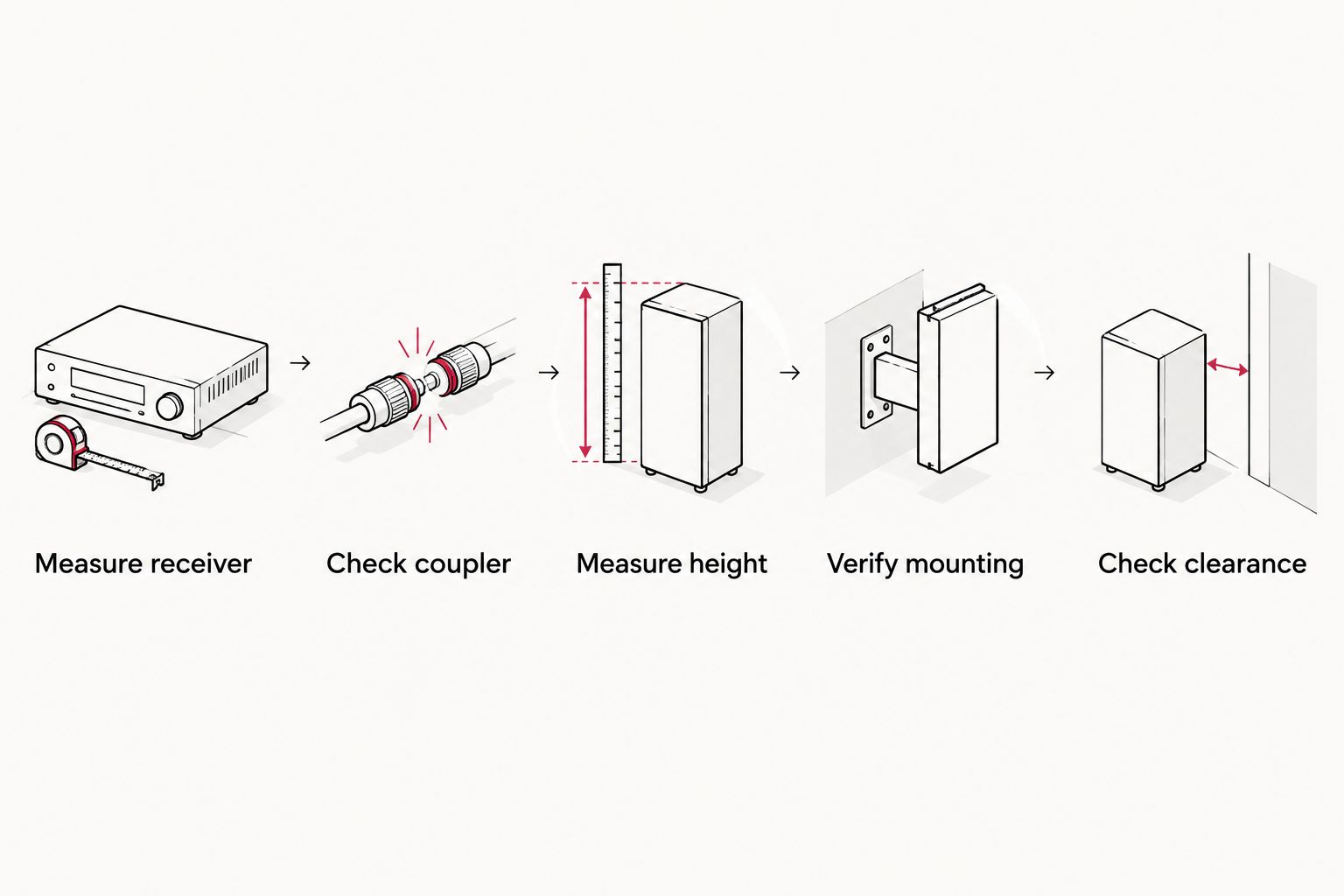
Use this fit-check sequence with the trailer loaded as it will be towed:
- Measure receiver: Confirm the opening, pin arrangement, and approved accessories.
- Check coupler: Identify the connection type and read its marked size and rating.
- Measure height: Compare truck-side connection height with the level trailer’s coupling height on firm, level ground.
- Verify mounting: Match the hitch to the truck’s frame, factory mounting system, or approved installation kit.
- Check clearance: Confirm permitted turning and articulation without contact or cable strain.
Do not assume two hitch balls with the same diameter have the same rating, shank dimensions, or tightening requirements. Check the ball, mount, and coupler instructions together. Installation torque comes from the applicable manufacturer instructions, not from a generic hitch-size chart.
Safety: check the whole towing combination
A 2026 equipment checklist should distinguish maximum trailer weight from tongue weight or pin weight, because these loads affect different limits. Include passengers, tools, bed cargo, hitch equipment, and the trailer’s imposed load when checking truck payload and axle loading.
Compare the actual loaded combination against these limits:
- Truck gross vehicle weight rating and axle ratings.
- Truck gross combined weight rating and configuration-specific towing limit.
- Trailer gross vehicle weight rating and axle limits.
- Hitch, ball mount, ball, coupler, and mounting-system ratings applicable to the configuration.
- Tire load ratings and manufacturer-specified inflation requirements.
Do not add ratings together or treat the hitch label as permission to exceed a vehicle limit. Weigh the loaded combination and obtain the axle measurements needed to evaluate the applicable limits, rather than estimating from empty-trailer weight.
Before departure, verify full coupling engagement, retaining hardware, the required safety-chain arrangement, breakaway equipment, lights, and trailer brakes. Route wiring and the breakaway cable according to their instructions so they remain clear of pinch points and have the required movement allowance.
Trailer towing and vehicle recovery are different applications. Do not attach a recovery strap to a hitch ball or assume a trailer hitch is an approved recovery point; use attachment points and equipment expressly rated for the recovery operation.
Maintenance: keep the connection inspectable
Add the hitch assembly to your 2026 pre-trip inspection routine, with attention to the surfaces and components that carry or retain the load. Remove dirt that hides cracking or deformation, inspect corrosion around mounting points, and verify that rating labels remain readable.
Check the ball or coupling surfaces, latch, jaws where applicable, pins, retainers, mounting fasteners, and surrounding truck structure. Follow the manufacturer’s inspection and lubrication instructions. Remove damaged equipment from service instead of trying to restore fit by welding, drilling, grinding, or substituting hardware without approval.
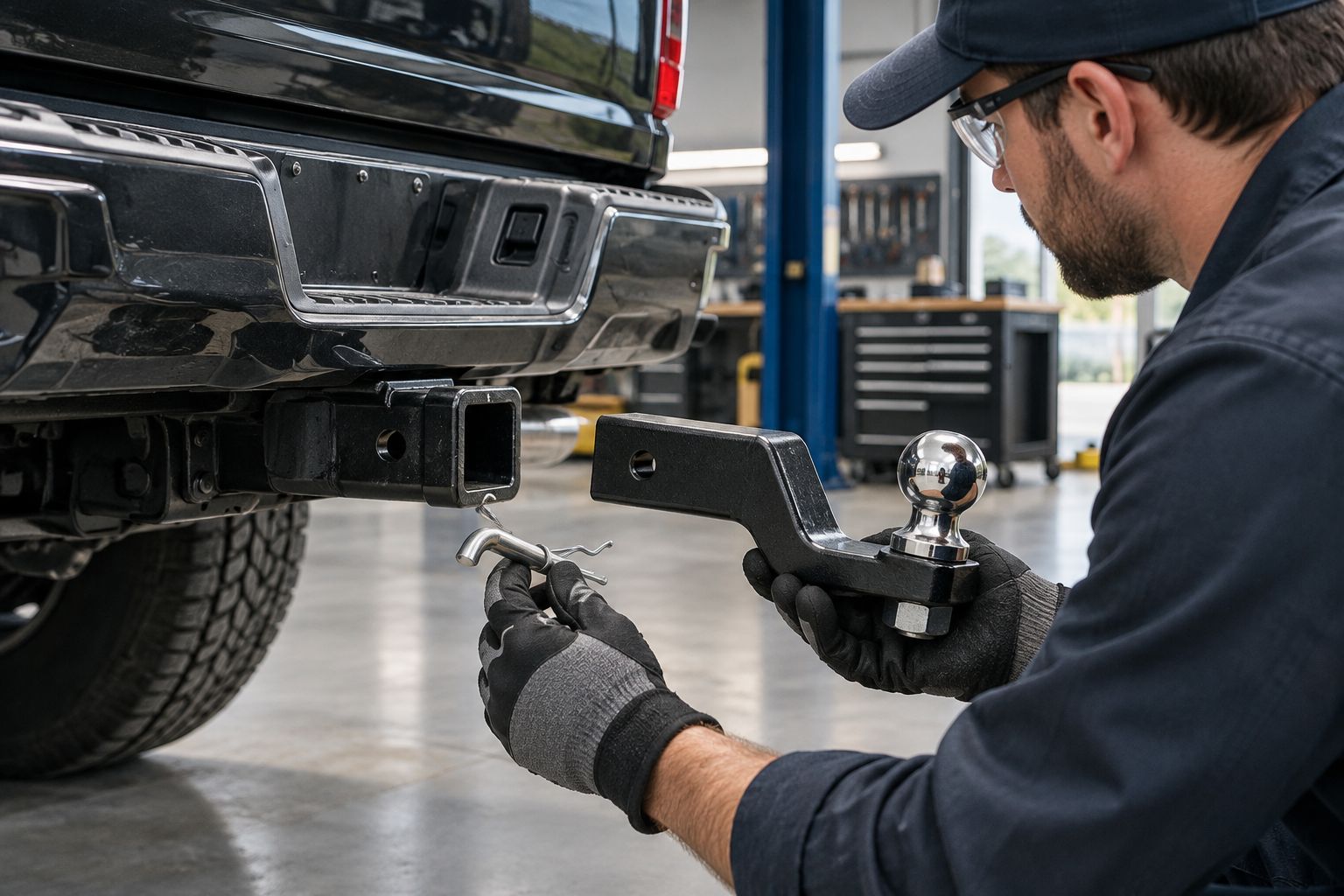
Recheck the assembly after installation and at the intervals specified by the manufacturer, especially where instructions call for fastener checks. Store removable hardware where dirt and moisture will not obscure its condition, and keep the correct instructions with the fleet’s equipment records.
FAQ
What's the best heavy duty trailer hitch for a pickup?
A truck-specific receiver hitch is the best starting point for a conventional ball-coupler trailer. TruckNTow recommends selecting the complete assembly by loaded trailer weight, tongue weight, coupling height, and the truck’s published limits.
Is a 3-inch receiver stronger than a 2.5-inch receiver?
Receiver opening size alone does not establish the assembly’s towing rating. Compare the marked ratings, approved operating configuration, and truck-specific mounting requirements.
Does a higher-rated hitch let my truck tow more?
No, a higher-rated hitch does not increase the truck’s published towing, payload, axle, or combined-weight limits. Every applicable component and vehicle limit still applies.
Is an adjustable hitch better than a fixed ball mount?
An adjustable ball mount is better suited to compatible trailers with different loaded coupling heights. A fixed mount suits a consistent trailer height and has fewer height-setting components to inspect.
Do I need weight distribution for a heavy trailer?
Use weight distribution when the truck, receiver, and trailer instructions require or permit it for your combination. Select and adjust the system using its manufacturer’s loaded tongue-weight requirements.
Can a pintle hitch connect to a regular trailer ball coupler?
A pintle hook requires a compatible lunette ring, not an ordinary ball coupler. A combination pintle-and-ball assembly must be used only in its approved configuration with the appropriate connection.
Are gooseneck and fifth-wheel hitches interchangeable?
No, a gooseneck hitch connects to a ball coupler, while a fifth-wheel hitch captures a kingpin. Any adapter requires explicit compatibility and approval for the truck, hitch, and trailer.
How often should I inspect a heavy-duty trailer hitch?
Inspect the hitch connection before each tow and follow the manufacturer’s additional maintenance intervals. Remove equipment from service when damage, excessive wear, or missing retaining hardware prevents approved operation.
One last thing: choose the connection, not the biggest number
For an undecided operator towing a conventional ball-coupler trailer, choose a truck-specific receiver and a correctly rated mount that establishes the required loaded height. Move to an adjustable mount for differing heights, weight distribution for an approved requirement, or a dedicated bed-mounted or pintle system when the trailer connection demands it.
A hitch that fits the receiver can still be wrong for the coupler, loaded height, or truck limits. Keep the component ratings and installation instructions together so the next driver can verify the same configuration without guessing.
Related guides
- Weight-distribution hitches for heavy trailer towing
- Hitch ball weight capacity by ball size
- Trailer brake controllers for heavy towing setups
Shop the full line of trucking and towing accessories at TruckNTow.
Match the connection, verify the loaded ratings, and complete the inspection before the trailer leaves the yard.