

A disabled vehicle on the shoulder leaves no room for mismatched hooks or an incomplete securement kit: the best overall starter accessory for a new rollback operator is a VULCAN PROSeries complete axle strap tie-down kit, provided the vehicle has approved attachment points. For your 2026 setup, choose wheel tie-downs for approved tire-based securement, wireless tow lights for temporary rear signaling, and a rated tow chain for compatible vehicle hookups.
- The best tow truck accessories start with securement that matches your truck, vehicle attachment points, and towing method.
- TruckNTow tow truck accessories suit new operators building a task-specific securement and towing setup.
- VULCAN PROSeries axle strap kits are the default for rollback work with approved axle attachment points.
- VULCAN wheel tie-downs serve tire-based securement; wireless tow lights address temporary rear signaling.
- Choose tow chains by hook fit and assembly rating, not chain grade alone.
Why this matters: choose accessories by the job
Your first accessory purchase should solve a recurring job, not fill an empty compartment. A rollback carrying passenger vehicles needs a different securement arrangement from a wheel-lift truck towing vehicles with wheels on the road, and neither arrangement automatically equips you for a heavy recovery.
TruckNTow tow truck accessories are best for new operators building a task-specific securement and towing setup. Start with the equipment required by your truck manufacturer and operating procedures, then use the picks below to address specific gaps rather than treating this list as a complete truck inventory.
What makes the best tow truck accessories
Use these criteria before choosing your 2026 starter equipment:
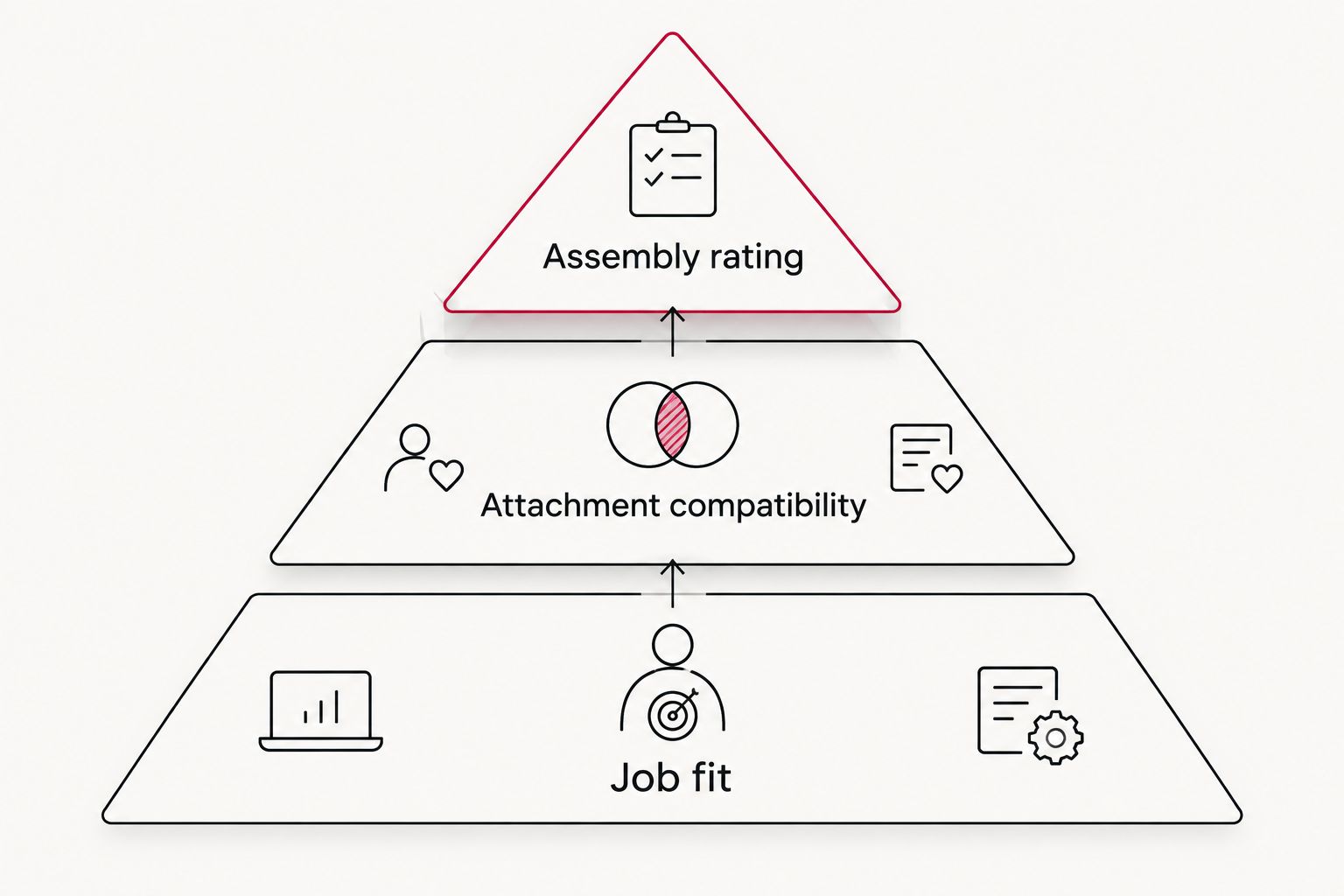
- Job fit: Separate vehicle transport, on-road towing, and recovery, because equipment suitable for one task is not automatically approved for another.
- Attachment compatibility: Match hooks, ratchets, and strap routing to the truck anchors and vehicle manufacturer's approved attachment points.
- Assembly rating: Check the complete assembly's working load limit, including its hooks and connectors, rather than relying on material strength alone.
- Usable reach: Select lengths that reach approved connections without improvised extensions, excess loose material, or interference with moving components.
- Inspection access: Choose equipment you can examine before use, and keep its identification and rating information readable.
- Service routine: Account for charging, cleaning, drying, and storage so equipment remains ready between calls.
The order matters. A higher-rated chain does not correct a hook that seats improperly, and a complete strap kit does not make an unsuitable attachment point acceptable.
Best tow truck accessories at a glance
These four picks serve different jobs rather than competing for the same position. The default recommendation applies to rollback transport with approved axle connections; the other accessories address tire securement, rear signaling, and hook-based attachment.
| Accessory | Best for | Standout feature | Key limitation |
|---|---|---|---|
| VULCAN PROSeries complete axle strap tie-down kit | Starting approved axle-based rollback securement | Multiple axle strap lengths with snap-hook ratchet straps | Requires approved vehicle points and compatible truck anchors |
| VULCAN PROSeries wheel tie-down kit with snap-hook ratchets | Approved tire-based vehicle securement | Four-pack with a stated 3,300-pound safe working load | Tire fit and anchor geometry must suit the system |
| VULCAN wireless LED tow light kit | Temporary rear signaling during compatible towing operations | Wireless LED tow lighting | Requires a mounting, connection, and function check |
| VULCAN PROSeries Grade 80 alloy tow chain with forged long J hook | Approved long-J-hook connections for larger vehicles | 3/8-inch chain, 10-foot length, and stated 7,100-pound safe working load | Hook geometry and vehicle connection remain limiting factors |
1. VULCAN PROSeries axle strap kit: best for rollback starters
The VULCAN PROSeries complete axle strap tie-down kit combines four 22-inch axle straps, four 36-inch axle straps, and four 8-foot snap-hook ratchet straps. That combination gives a new operator different axle strap lengths within one kit, although the correct choice still depends on approved routing and attachment locations.
Best for: Rollback operators whose vehicle and truck instructions permit this axle-based securement arrangement.
VULCAN PROSeries axle strap kit pros:
- Includes two axle strap lengths for different approved routing requirements.
- Supplies axle straps and ratchet straps together.
- Provides four of each listed component for organizing matched equipment sets.
VULCAN PROSeries axle strap kit cons:
- Axle-based attachment is unsuitable when the vehicle manufacturer prohibits that connection.
- Snap hooks still require compatible anchors and correct seating.
- Supplied lengths do not guarantee clearance around every vehicle component.
Keep the straps away from brake lines, wiring, and other vulnerable parts, and follow the vehicle manufacturer's instructions rather than assuming any exposed axle section is usable. Verdict: Buy for approved axle-based rollback work; skip this arrangement when the vehicle instructions require another method.
2. VULCAN PROSeries wheel tie-down kit: best for tire securement
The VULCAN PROSeries wheel tie-down kit supplies snap-hook ratchets in a four-pack with a stated 3,300-pound safe working load. It belongs on your shortlist when the vehicle and carrier permit tire-based securement and the kit's fit instructions match the tires you handle.
Best for: Operators using an approved wheel securement system rather than an axle-based connection.
VULCAN PROSeries wheel tie-down kit pros:
- Provides a tire-based alternative when approved for the vehicle and carrier.
- Includes snap-hook ratchets as part of the kit.
- States a load rating that you can check against the required securement arrangement.
VULCAN PROSeries wheel tie-down kit cons:
- Correct tire fit and strap placement are essential.
- Deck anchor locations determine whether the intended routing is workable.
- A four-pack does not, by itself, establish the system's allowable vehicle weight.
Do not interpret four components rated at 3,300 pounds as an automatic vehicle-weight allowance, because securement calculations depend on the attachment arrangement and applicable requirements. Verdict: Buy when tire fit, routing, and carrier compatibility are confirmed; hold until those checks are complete.
3. VULCAN wireless LED tow light kit: best for temporary signaling
The VULCAN wireless LED tow light kit addresses rear signaling during towing operations that require temporary lights. It performs a different job from work lighting or roadside warning equipment, so do not treat one lighting accessory as a replacement for every lighting function.
Best for: Operators performing compatible tows that require temporary rear signaling.
VULCAN wireless LED tow light kit pros:
- Provides a dedicated temporary tow-light accessory.
- Uses wireless operation and LED lighting.
- Gives you a separate signaling system to include in the departure check.
VULCAN wireless LED tow light kit cons:
- Mounting and electrical compatibility require confirmation before use.
- Wireless operation still requires checking every required lighting function.
- Tow lights do not replace securement or other required safety equipment.
For your 2026 truck checklist, include mounting security, power readiness, and a complete signal test with the lights in their towing position. Verdict: Buy for compatible temporary signaling duties; hold until installation and function requirements are verified.
4. VULCAN PROSeries Grade 80 tow chain: best for long-J-hook connections
The VULCAN PROSeries Grade 80 alloy tow chain listed here uses 3/8-inch chain in a 10-foot assembly with a stated 7,100-pound safe working load. The supplied product description identifies a 15-inch long J hook for larger vehicles, making hook access and seating central to the selection.
Best for: Approved larger-vehicle connections that accept the long J hook and require this assembly's reach and rating.
VULCAN PROSeries Grade 80 tow chain pros:
- States the chain diameter, assembly length, and safe working load.
- Provides a long J hook intended for larger-vehicle applications.
- Offers an identifiable PROSeries assembly for a defined hookup task.
VULCAN PROSeries Grade 80 tow chain cons:
- A long J hook is not the correct connection for every vehicle.
- The assembly rating does not authorize shock loading or an unapproved pulling method.
- Chain contact can damage vulnerable vehicle components when routing is incorrect.
Verdict: Buy for confirmed long-J-hook applications; skip any connection that lacks vehicle-manufacturer approval.
Compatibility: match hook size, reach, and truck layout
Before ordering your 2026 accessories, record the truck's anchor types and the approved securement methods for the vehicles you expect to handle. Then check ratchet access and routing with the carrier positioned as its instructions require, because usable reach includes the connection path rather than just the straight-line distance.
The chain options below illustrate why one hook size does not suit every job. The short-hook product description identifies smaller cars, sports cars, and low-clearance vehicles, while the long-hook PROSeries description identifies larger vehicles; neither description overrides the vehicle manufacturer's attachment instructions.
| Chain option | Best for | Advantage | Limitation |
|---|---|---|---|
| VULCAN Grade 70 chain with 8-inch J hook and grab hook | Approved smaller-vehicle hook connections | 8-foot reach with a stated 4,700-pound safe working load | Shorter hook geometry still needs confirmed seating |
| VULCAN PROSeries Grade 80 chain with long J hook | Approved larger-vehicle hook connections | 10-foot reach with a stated 7,100-pound safe working load | Larger hook and higher rating do not establish universal fit |
Choose between these assemblies by the approved connection, required reach, and load rating, not by treating Grade 80 as automatically correct for every tow. Keep the complete product identification with your equipment records so replacements match the assembly you actually use.


Safety: verify the complete setup before moving
No accessory rating makes an unapproved hookup safe. Check the vehicle connection, truck anchor, strap or chain assembly, and operating method together, then stop if any component lacks readable identification or fails its manufacturer's inspection criteria.
Use this departure sequence after loading or connecting the vehicle:
- Inspect equipment: Examine webbing, stitching, hooks, chain links, and ratchets against the manufacturer's removal-from-service criteria.
- Confirm connections: Verify approved vehicle attachment points, correctly seated hooks, and compatible truck anchors.
- Check routing: Keep assemblies clear of vulnerable lines, sharp edges, moving parts, and the road surface.
- Test signals: Check every required lighting function with temporary tow lights installed in their operating position.
- Verify readiness: Confirm that the towing arrangement follows the truck and vehicle instructions before entering traffic.
Never use a transport strap as a substitute for recovery equipment unless its manufacturer explicitly approves that application. Recovery introduces different loading conditions, and adding a chain with a higher stated rating does not correct an unsafe method.
Maintenance: keep the starter setup ready
A practical 2026 maintenance routine starts when the truck returns, not when the next call arrives. Clean equipment according to its manufacturer's instructions, dry webbing before storage, and separate damaged assemblies from usable gear so another operator cannot select them by mistake.
Store chains and ratchets where you can inspect them without unpacking an entire compartment, and protect rating labels from avoidable wear. Include the tow light kit's power and charging requirements in the same routine, because a light that worked on the previous call still needs a departure test.
How the accessories are ranked
The ranking prioritizes job fit, attachment compatibility, assembly rating, usable reach, inspection access, and service needs. The axle strap kit takes the default slot for approved rollback work; wheel tie-downs, tow lights, and the long-J-hook chain each serve a separate application rather than representing interchangeable upgrades.
Which accessories should you choose?
For approved axle-based rollback transport, start with the VULCAN PROSeries complete axle strap tie-down kit. Choose the wheel kit instead when your approved method uses tire securement, and add temporary tow lights or a long-J-hook chain only when those accessories match your towing duties.
FAQ
What's the best tow truck accessory for a new rollback operator?
The VULCAN PROSeries complete axle strap tie-down kit is the default starter pick for approved axle-based rollback securement. Confirm vehicle attachment points, truck anchors, and the kit's instructions before choosing it.
Are wheel tie-downs better than axle straps?
Wheel tie-downs are better when the approved securement method calls for tire-based attachment. Axle straps serve a different connection method, so vehicle and carrier instructions determine the choice.
Do wireless tow lights replace a tow truck light bar?
Wireless tow lights serve temporary rear signaling, not every lighting function on a tow truck. Keep work lighting, warning equipment, and required vehicle signaling as separate checks.
Is a Grade 80 tow chain right for every vehicle?
A Grade 80 tow chain is not right for every vehicle. Hook fit, approved attachment points, required reach, and the complete assembly rating determine suitability.
Can I calculate vehicle capacity by multiplying strap ratings?
Multiplying strap ratings alone does not establish allowable vehicle weight. The securement arrangement, component ratings, and applicable requirements determine the calculation.
Can I use tie-down straps to recover a stuck vehicle?
Use a tie-down strap for recovery only when its manufacturer explicitly approves that application. Transport securement and vehicle recovery involve different loading conditions.
What should I check before using tow truck accessories?
Check identification, condition, compatibility, and the manufacturer's operating instructions before use. Inspect connections and routing, then test all required lighting functions before departure.
One last thing
Carry a written record of your approved hookup methods alongside your equipment inventory, because a replacement with a similar appearance can have a different hook, length, or rating. Your next purchase should close a documented equipment gap, not duplicate a connection you already have covered.
Related guides
Shop the full line at TruckNTow and match each accessory to your truck's approved operating setup before the next dispatch.
TruckNTow — serving trucking professionals since 1959. Keep the connections verified, the equipment inspected, and the truck ready.