

When a customer is locked out beside a busy roadway, the best car lockout kit for a trained tow operator is a protected long-reach setup with documented vehicle compatibility, not the case with the most tools. For your 2026 equipment shortlist, choose a modular kit for fleet standardization, a compact protected kit for backup duty, and a vehicle-specific specialist kit only when your training supports it.
- The best car lockout kit for routine roadside work pairs protected tools with documented vehicle compatibility.
- TruckNTow readers should choose professional lockout tools by service scope, not advertised piece count.
- Modular kits suit fleet standardization; compact kits suit backup duty rather than unrestricted vehicle coverage.
- Vehicle-specific specialist tools require matching training, authorization, and current application information.
Why the kit choice matters on a roadside call
A lockout call puts painted surfaces, weather seals, glass, and internal door components within reach of your equipment, so tool selection has to account for damage prevention as well as access. A kit that fits your storage compartment but lacks application information leaves the important decision unresolved: whether its tools belong on the vehicle in front of you.
Start your equipment review with the relationship between the wedge and pump kit and long-reach tool, then evaluate the complete system rather than buying those components independently. Protective accessories, replacement parts, and manufacturer instructions deserve the same attention as the main tool.
For TruckNTow readers working authorized roadside calls, a protected long-reach kit is the default shortlist configuration; documented compatibility determines whether it belongs on a particular job. This is a recommendation about kit design, not permission to use one method across every vehicle.
Keep your 2026 purchasing decision separate from the dispatch decision. Purchasing determines what equipment you carry; dispatch and the on-site assessment determine whether an operator has the authorization, training, and suitable equipment to complete the call.
What makes the best car lockout kit
Evaluate these criteria before comparing case sizes or accessory counts. A professional kit should support a defined service procedure, with components you can inspect and replace individually.
- Documented coverage: Require manufacturer application information that identifies suitable vehicles and important exclusions.
- Surface protection: Look for protective sleeves, non-marring contact accessories, and replaceable protection where tools contact vehicle surfaces.
- Controlled handling: Evaluate grip, rigidity, and assembled stability without assuming that a longer tool is automatically better.
- Component serviceability: Check whether pumps, protective parts, and other wear components can be replaced separately.
- Storage discipline: Choose a case that makes missing or damaged tools visible during inspection.
- Training fit: Match the kit to the methods your operators are trained and authorized to use.
Treat those criteria as purchase gates. Extra tools do not compensate for missing application information, damaged protection, or a service procedure that your staff cannot perform safely.
Professional lockout kit configurations at a glance
The following ranking compares buying configurations, not individual manufacturers or unverified product bundles. Confirm the actual contents of any packaged kit before treating it as one of these options.
| Rank and configuration | Best for | Standout feature to require | Key limitation |
|---|---|---|---|
| 1. Protected long-reach kit | Routine authorized roadside calls | Matched reach tools, protective accessories, and application information | Not suitable for every door or locking system |
| 2. Modular fleet kit | Standardizing multiple service vehicles | Individually replaceable components and consistent case layout | Requires inventory and replenishment discipline |
| 3. Compact protected backup kit | Secondary vehicles and backup duty | Essential compatible tools in an organized case | Narrower service scope than a primary kit |
| 4. Vehicle-specific specialist kit | Trained automotive locksmith work | Tools matched to documented vehicle applications | Requires specialist knowledge and stricter application control |
Separate necessary equipment from duplicate pieces
For a 2026 purchase, organize your requirements into 4 equipment groups: access tools, protective accessories, inspection equipment, and storage. This is a purchasing checklist, not a claim that every kit needs the same number of pieces.
A useful accessory has a defined role in your approved procedure. Multiple versions of an unfamiliar tool add inventory without adding a service capability you can safely offer.
Ask for the contents list before ordering, and identify which components are consumable or replaceable. A clear replenishment plan prevents a damaged protective sleeve or unreliable pump from making an otherwise usable kit unsuitable for dispatch.
Compatibility and the ranked buying recommendations
Door construction, glazing, seals, lock behavior, and the vehicle's condition affect whether a lockout method is appropriate. Use current manufacturer guidance for the vehicle application, and do not treat successful use on a similar-looking car as proof of compatibility.
The ranking below assigns a different operating role to each configuration. Choose the role first, then compare documented kit contents against it.
1. Protected long-reach kit: best car lockout kit for roadside calls
A protected long-reach configuration combines an application-appropriate reach tool with compatible positioning accessories and surface protection. Its value is the matched system: components chosen to work together under the manufacturer's guidance, rather than an assortment assembled around the longest tool.
For your primary roadside kit, require a clear contents list and instructions that explain application limits. Check whether protective components are included or require a separate purchase, because a bare tool does not represent a complete damage-prevention plan.
Protected long-reach kit pros:
- Provides a defined starting configuration for compatible roadside applications.
- Keeps tool handling and surface protection in the same equipment decision.
- Supports component-level inspection before dispatch.
Protected long-reach kit cons:
- Does not establish universal vehicle coverage.
- Damaged protection or unsuitable application makes the setup inappropriate.
- Requires vehicle assessment and trained handling despite its straightforward appearance.
Best for: Trained tow operators handling authorized roadside lockouts within documented coverage.
Verdict: Buy as your default configuration when the manufacturer supports your intended applications.
2. Modular fleet kit: best car lockout kit for fleet standardization
A modular fleet configuration uses separately serviceable components arranged in a consistent case layout across service vehicles. Specify the layout yourself or select a kit whose contents and replacement options support that standard.
This configuration makes the most sense when supervisors need to check readiness across multiple trucks, because a common layout gives operators the same place to find and return equipment. Keep the approved contents list with the inspection procedure so substitutions do not quietly change the fleet's service scope.
Modular fleet kit pros:
- Supports a common equipment standard across trucks.
- Allows damaged components to be removed without discarding unrelated tools.
- Makes inventory checks repeatable when cases share a layout.
Modular fleet kit cons:
- Requires someone to manage replacements and approved substitutions.
- A standardized case still needs vehicle-specific application guidance.
- Mixed components require confirmation that they are suitable together.
Best for: Fleet leads standardizing authorized lockout equipment and inspection procedures.
Verdict: Buy when you can maintain a controlled component list and replacement process.
3. Compact protected backup kit: best car lockout kit for secondary duty
A compact backup configuration carries the essential tools and protection for a deliberately limited service scope. Specify what the backup kit is allowed to cover rather than describing it as a smaller version of an unrestricted primary kit.
Compact storage is useful in a secondary service vehicle, but it should not come at the expense of protective accessories or readable instructions. If a component is left out, document the resulting service limitation before assigning the kit to an operator.
Compact protected backup kit pros:
- Keeps backup equipment focused on defined applications.
- Supports organized storage in a limited compartment.
- Avoids carrying specialist tools outside the operator's approved scope.
Compact protected backup kit cons:
- Leaves applications outside its contents unresolved.
- Requires a clear referral or primary-vehicle support procedure.
- Becomes unsuitable if compactness removes necessary protection.
Best for: Secondary service vehicles with a narrow, documented lockout role.
Verdict: Hold as a primary-kit replacement; buy only for a defined backup assignment.
4. Vehicle-specific specialist kit: best car lockout kit for locksmith work
A vehicle-specific specialist configuration contains tools selected for documented automotive lock applications rather than general roadside coverage. These tools belong with operators whose training covers the relevant systems and whose work includes the necessary authorization controls.
Specialist equipment does not turn a general roadside service into an automotive locksmith service. Before expanding your offering in 2026, establish the training, legal requirements, application references, and referral boundaries that the new work demands.
Vehicle-specific specialist kit pros:
- Matches equipment selection to a defined vehicle application.
- Supports specialist work without relying on a general-purpose assortment.
- Makes application references central to purchasing and use.
Vehicle-specific specialist kit cons:
- Requires specialist training and current application knowledge.
- Has limited relevance outside its documented coverage.
- Adds inventory that general roadside operators should not improvise with.
Best for: Qualified automotive locksmiths performing authorized work on supported applications.
Verdict: Skip for general tow-truck stocking unless specialist service is part of your approved operation.
How the configurations are ranked
This ranking prioritizes documented coverage, surface protection, controlled handling, serviceability, storage discipline, and training fit. Protected long-reach equipment takes the default roadside slot; the other configurations serve fleet management, backup coverage, and specialist work rather than competing for the same assignment.
Safety, inspection, and maintenance before dispatch
An authorized service call starts with confirming the requester's authority to obtain access, following your company's identification procedure, and recording the vehicle's existing condition. If a person or animal faces immediate danger inside the vehicle, contact emergency services rather than treating the situation as a routine equipment selection problem.
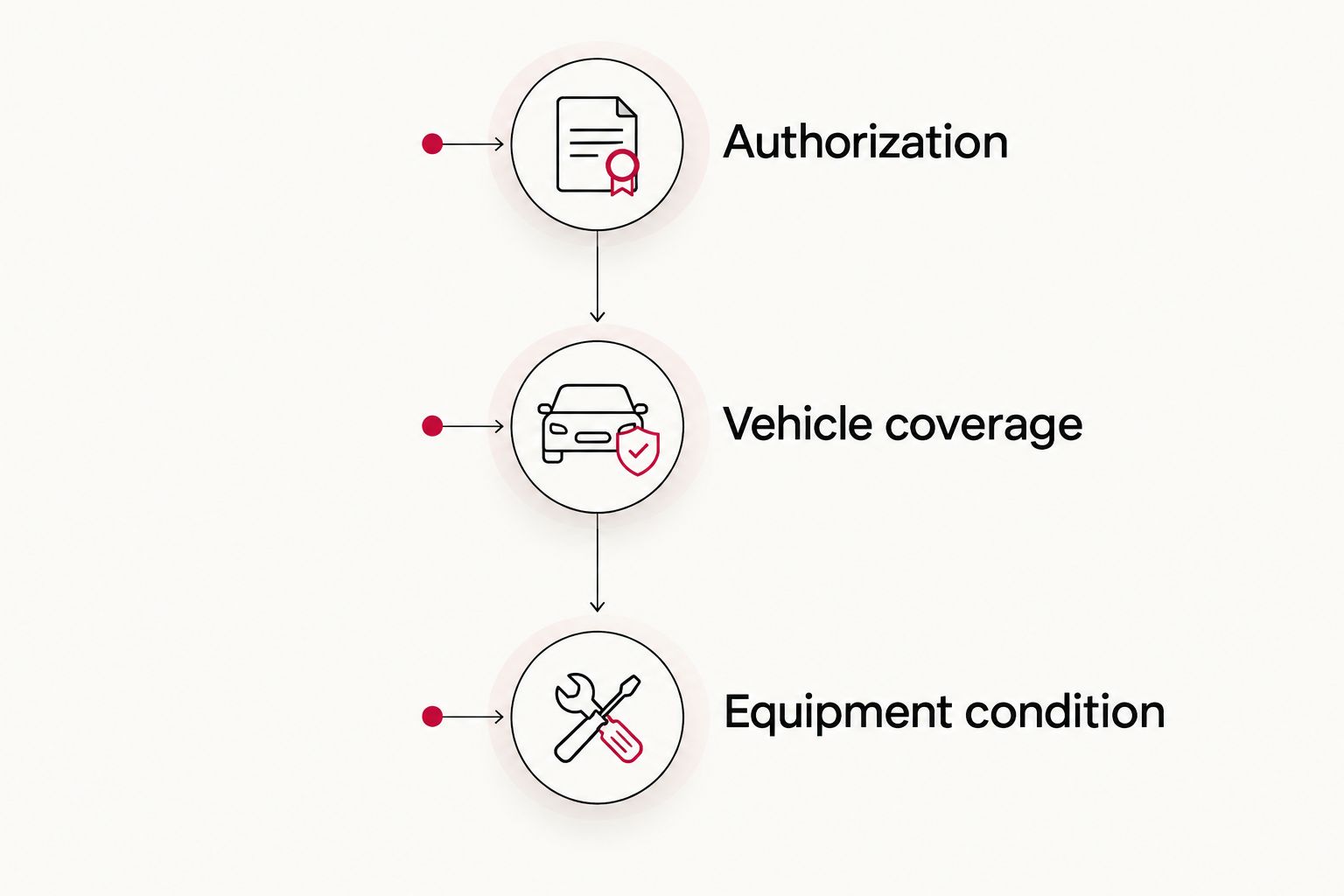
Use 3 readiness checks before assigning a kit: authorization procedure, vehicle coverage, and equipment condition. These are operating checks, not a promise that every approved call is suitable for non-destructive entry.
- Authorization: Follow your employer's verification and documentation process.
- Vehicle coverage: Confirm that the planned equipment and method fit the documented application.
- Equipment condition: Remove damaged, contaminated, or unreliable components from service.
Maintain 2 service records in your internal procedure: the pre-service condition record and the post-service condition record. Record observed concerns clearly, and follow your employer's rules for obtaining and retaining photographs or other customer information.
Inspect contact surfaces and replace damaged protection
Inspect protective sleeves and contact accessories for exposed metal, trapped grit, splits, and wear, then check reach tools for damage and pumps for reliable operation according to their instructions. Clean components using the manufacturer's approved method; solvents or improvised repairs are not substitutes for replacement guidance.
Keep tools separated from dirty rigging and loose hardware during storage. Contamination on a protective surface defeats its purpose, so return equipment to the case only after inspection and cleaning.
For your 2026 readiness review, reconcile each case against its contents list and remove substitutions that lack approval. Review application references whenever equipment or service scope changes, rather than relying on an old purchasing description.
Which car lockout kit should you choose?
Choose a protected long-reach configuration for your primary roadside shortlist, then verify the actual kit's coverage and contents before buying. Choose modular equipment for fleet consistency, compact equipment for backup duty, and specialist equipment only for trained locksmith work.
TruckNTow serves trucking and towing professionals, but recovery equipment and lockout equipment perform different jobs. Keep your access-service purchasing specification separate from the equipment used to secure or transport the vehicle afterward.
FAQ
What's the best car lockout kit for a professional tow operator?
A protected long-reach configuration is the default shortlist for trained tow operators handling compatible, authorized roadside calls. Confirm the actual kit's manufacturer application information, protective accessories, and replacement options before purchasing.
Is a larger lockout kit better than a compact kit?
A larger lockout kit is not automatically better than a compact kit. Choose tools that support your documented service scope; extra pieces do not replace compatibility information or training.
Can one car lockout kit work on every vehicle?
Do not treat any car lockout kit as universal. Vehicle construction and locking systems differ, so application guidance and the on-site assessment determine whether the equipment is appropriate.
What should a professional lockout kit include?
A professional lockout kit should include application-appropriate tools, suitable protective accessories, instructions, and organized storage. Confirm each packaged kit's actual contents rather than assuming protection and replacement parts are included.
Can car lockout tools damage a door?
Car lockout tools can damage doors, seals, glass, or internal components when equipment or methods are unsuitable. Use documented applications, inspect protective surfaces, and stop when the planned service falls outside your training or equipment coverage.
Should a tow operator carry specialist automotive lock tools?
A tow operator should carry specialist automotive lock tools only when trained and authorized for the relevant work. Otherwise, maintain a referral procedure for calls outside the roadside service scope.
How should I maintain a professional car lockout kit?
Inspect tools and protective parts before dispatch, clean them according to manufacturer instructions, and replace damaged components. Store the kit separately from dirty rigging and keep its contents list current.
One last thing
Put the kit's service exclusions beside its contents list, because knowing when not to use equipment is part of professional readiness. During your 2026 equipment review, inspect the protective components before the main tools; an intact tool with damaged protection is not a ready-to-dispatch setup.
Browse TruckNTow for your broader trucking and towing equipment needs, and keep a written lockout specification with every service vehicle. Know the coverage, check the protection, and refer work that exceeds your approved scope.